
Last updated November 18, 2026
Blown-In Insulation Troubleshooting: Common Problems and How to Fix Them
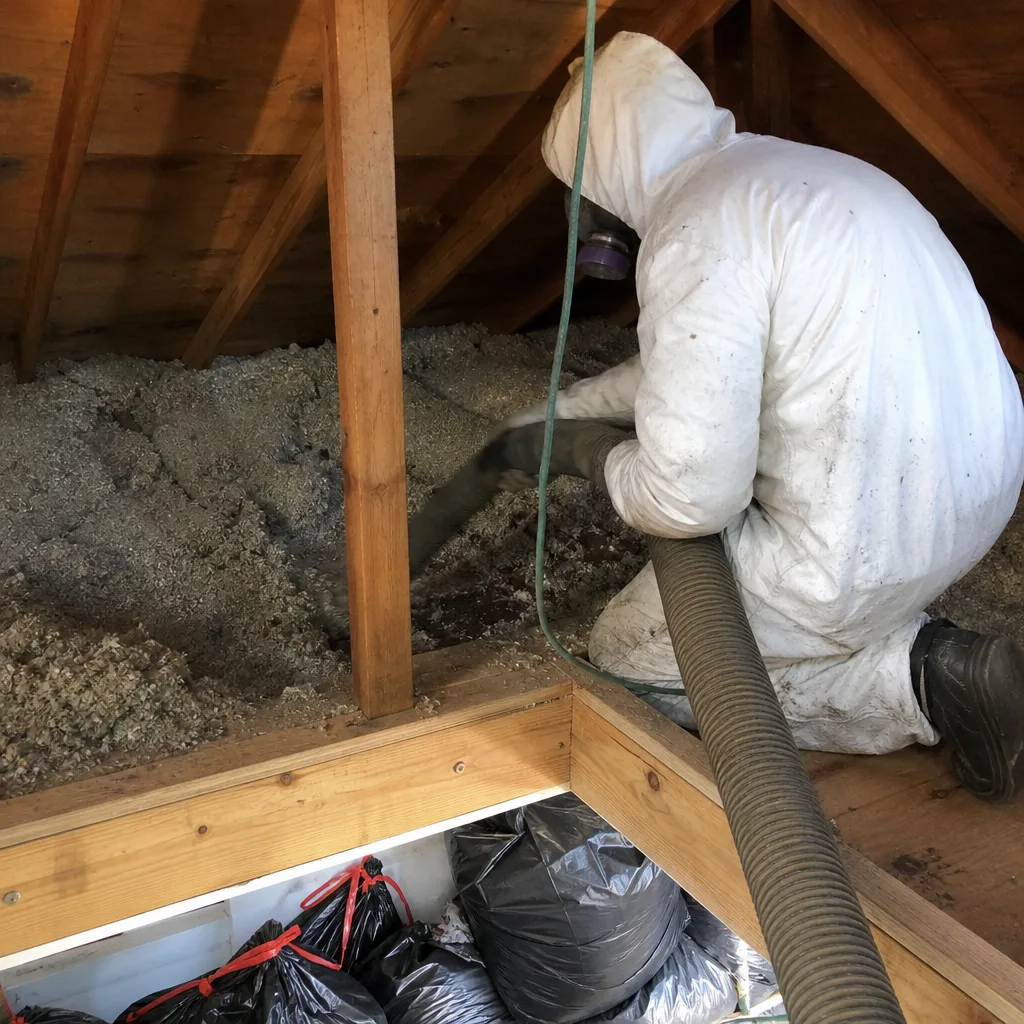
If your blown-in insulation looks fine when you stick your head up in the attic hatch, but your energy bills say otherwise, the problem is almost certainly settling and compression that photos can’t show. Here’s the counterintuitive part: in Paradise, NV, most failed blown-in jobs we inspect didn’t fail because of bad material. They failed at the seams, around the light cans, along the eaves, and in the spots no one thought to check. The fix usually isn’t “more insulation everywhere.” It’s finding the specific failure and correcting it. This guide walks you through diagnosing the five most common problems yourself, including a five-minute depth check, and knowing exactly when to call a pro.
Quick Answer
Blown-in insulation problems almost always trace back to two root causes: installation errors from years ago (under-filled bays, unsealed attic floors, blocked eave vents) or attic conditions that slowly undermined good work (settling, wind washing, moisture clumping in cellulose). You can diagnose which one you’re dealing with using a ruler, a flashlight, and a quick visual inspection before spending a dollar on a service call. Most fixes fall into four buckets: air sealing, topping off the depth, removing damaged material, or correcting ventilation.
Table of Contents
- The Five-Minute Depth Check
- Air Sealing Failures That Undermine Good Insulation
- Wind Washing in Paradise: Why Eave Areas Go Cold
- Moisture Damage in Cellulose (Yes, Even in the Desert)
- Add Over Existing Insulation or Remove and Restart?
- Attic Ventilation Problems That Mimic Insulation Failure
- Common Mistakes to Avoid
- When to Call a Professional
The Five-Minute Depth Check
Before you call anyone, measure what you actually have. In Paradise, homes are usually running R-30 to R-38 when the local climate wants R-49 or better for the attic floor. Below R-30 and you’re losing money every summer no matter how the material looks.
Here’s how to check in five minutes:
- Grab a ruler or a tape measure and a flashlight. Climb to the attic hatch and stay on the joists – never step on the ceiling drywall between them.
- Measure the loose-fill depth in at least five spots: near the hatch, over the center of the house, along an exterior wall, near a recessed light, and at the far end of the attic. Write each number down.
- Convert depth to R-value. Fiberglass loose-fill runs about 2.2 to 2.5 per inch. Cellulose runs about 3.2 to 3.8. So 10 inches of fiberglass is roughly R-22 to R-25; 10 inches of cellulose is roughly R-32 to R-38.
- Compare the target. If your lowest reading is under 12 inches of fiberglass or under 13 inches of cellulose, you’re below R-38 and probably below spec for Paradise’s summer heat load.
- Look for the “shadows.” Ceiling joists showing through at the same level as the fill mean the insulation has settled and isn’t covering the thermal bridge. That’s a red flag regardless of what your ruler says.
If your readings are wildly inconsistent – 6 inches in one corner, 14 in the middle – the original install was uneven. That’s an installation problem, not a material problem, and no amount of topping off fixes it unless the bays get leveled first. We see this in older Paradise homes more than any other single issue.
Air Sealing Failures That Undermine Good Insulation
Here’s the fact that surprises most homeowners: insulation doesn’t stop air. It slows heat transfer. If your attic floor has open gaps around recessed lights, top plates, plumbing chases, or wire penetrations, air moves through those gaps freely, and the insulation above does nothing to stop it. You can have R-49 in the attic and still feel drafts from every outlet on the ceiling plane below.
The three worst offenders we find in Paradise attics:
- Recessed light cans. Older “non-IC” cans can’t be covered with insulation and often have visible daylight gaps around the housing. Air pours through them in both directions.
- Top plates at interior walls. The horizontal framing that caps wall studs rarely gets sealed during construction. Every top plate is a linear leak.
- Plumbing chases and drops. Where a drain or supply line runs from the attic down into a wall, the hole around the pipe is almost always wide open.
The fix is straightforward but tedious: foam or caulk every gap before adding a single bag of new material. This is why we tell homeowners that adding insulation over a leaky attic floor is money wasted – you’re paying for thermal resistance that the moving air bypasses. Attic insulation in Paradise done right means air sealing first, then depth. If your existing blown-in was installed without that step, the failure you’re seeing now was baked in from day one.
Wind Washing in Paradise: Why Eave Areas Go Cold
Paradise sits in a wind corridor, and periodic high-wind events do something to loose-fill insulation that doesn’t show up in any standard inspection photo. Wind enters through soffit vents at the eaves and travels laterally across the top of the insulation blanket, physically pushing material away from the perimeter. Over a few seasons, you end up with bare drywall along exterior walls and a dense drift of material piled up 4 feet into the attic.
The symptom is easy to recognize from inside the house: rooms along exterior walls – usually the bedrooms or the front living space – stay noticeably colder in winter or hotter in summer than the middle of the house. It’s not a window problem. It’s not a duct problem (usually). It’s a bare insulation zone along the exterior wall top plate.
Fixes that actually work:
- Install baffles or chutes at every eave bay so incoming air travels up the roof slope instead of across the insulation surface.
- Re-level the insulation in the affected bays and top it off to spec.
- Check the soffit vents themselves – blocked vents force air through the wrong paths and make wind washing worse.
In our experience across Paradise, wind washing is the most missed diagnosis on the list. Homeowners replace windows before anyone looks at the eave bays. Call us for a free second opinion on any written estimate before you spend money on window work that won’t fix the actual problem.
Moisture Damage in Cellulose (Yes, Even in the Desert)
Everyone assumes Paradise’s dry air rules out moisture problems in the attic. That assumption is wrong, and it costs homeowners money every year. Blown-in cellulose is treated with borate fire retardants, but it’s still paper-based. When it gets wet – even slightly, even seasonally – it mats, clumps, and loses both R-value and fire resistance.
Where does the moisture come from in a desert?
- Evaporative coolers (“swamp coolers”). This is the big one in Paradise. A leaking or improperly vented swamp cooler duct pushes humid air into the attic, where it condenses on the cold side of the roof deck and drips back into the insulation. We see matted cellulose in Paradise homes with roof-mounted swamp coolers more than any other single cause.
- Bathroom and kitchen exhaust fans venting into the attic instead of through the roof or a wall. Code requires exterior termination – if yours vents to the attic, you have a moisture factory running every morning.
- Roof leaks and flashing failures that drip slowly onto the insulation blanket without ever showing a stain on the ceiling below.
How to spot it: pull back a handful of cellulose from a suspicious spot. Healthy material is fluffy and uniform. Damaged material is dense, gummy, darker, and holds its shape when you squeeze it. If you find clumping, matting, or a musty smell, the material needs to come out. Topping off over wet cellulose just traps moisture and hides the problem. Manufacturers like GreenFiber publish clear guidance on this – wet cellulose is a remove-and-replace, not a cover-up.
Add Over Existing Insulation or Remove and Restart?
This is the honest decision point, and the answer depends on three specific conditions. We won’t tell you to remove material you don’t need to remove.
Tip toward ADDING over existing material when:
- The existing insulation is dry, fluffy, and free of pest contamination.
- Depth is consistently 8 inches or more across the attic.
- The material is fiberglass or clean cellulose and the original install was reasonably even.
- The only real problem is depth – you’re at R-30 and want R-49.
Tip toward REMOVING and restarting when:
- Cellulose is matted, clumped, or musty from the swamp cooler or exhaust issues above.
- Rodent contamination is present – droppings, nesting, or tunneling through the material.
- The original install was uneven (6 inches here, 14 there) and air sealing needs to happen underneath.
- You’re changing insulation type entirely, or the material is so compressed it can’t be re-fluffed.
The math usually works like this: if removal and replacement costs 40% more than a top-off but fixes a problem the top-off can’t, the top-off is the expensive option. If the existing material is healthy and level, adding depth back to spec is the better value every time. When we price spray foam insulation in Paradise or a blown-in top-off, we start by telling homeowners which scenario they’re actually in – not by upselling removal.
One more thing on brand choice: if you’re topping off existing fiberglass, matching fiberglass (Owens Corning or Johns Manville loose-fill) keeps the material behavior consistent. Mixing cellulose over fiberglass works but changes the depth math – cellulose is denser per inch, so the R-value stacking isn’t what it looks like on paper.
Attic Ventilation Problems That Mimic Insulation Failure
Half the calls that sound like insulation failures in Paradise turn out to be ventilation problems. If the attic can’t move air, heat builds up under the roof deck, radiates down into the insulation, and overwhelms even well-installed material. You’ll feel it as a hot ceiling in the late afternoon, and your AC will run longer than it should.
The three ventilation failures we see most often:
- Blocked soffit vents, usually by insulation that was blown too close to the eave or by years of dust and debris. Air has nowhere to enter, so the whole system stalls.
- Missing or undersized ridge vents. Intake without exhaust is half a system.
- Powered attic fans running continuously, which can pull conditioned air out of the house through ceiling leaks and make the whole problem worse.
The fix order matters. Correct the intake (clear soffits, add baffles), then verify exhaust (ridge vent function), then look at insulation depth. Doing it in reverse wastes money. If your attic needs a full ventilation correction alongside new material, that’s work a pro should scope – and it pairs naturally with crawl space encapsulation and vapor barrier work if the lower envelope has the same problems.
Common Mistakes to Avoid
- Topping off over a leaky attic floor. This is the single most common money-waster we see in Paradise. Paying for R-value while air pours through unsealed top plates means you get half the performance you paid for. Seal first, insulate second.
- Assuming desert air means no moisture risk. Swamp coolers and bathroom exhausts venting into the attic create the exact conditions cellulose can’t tolerate. Check for matting before you spend a dime on more material.
- Covering non-IC recessed lights. Loose-fill over the wrong light can is a fire hazard and traps heat. Confirm the rating on every can in the ceiling before anyone blows material.
- Blocking eave vents with new insulation. In Paradise’s wind corridor, blocked intake vents force air across the insulation itself and make wind washing worse. Baffles are not optional.
- Skipping the measurement and eyeballing it. “It looks fine” is the reason most homeowners wait 3-4 years before diagnosing settling. A ruler and 5 minutes beats a $200 service call every time.
- Ignoring the brand stacking math. Mixing cellulose over fiberglass without recalculating depth gives you the wrong R-value. Know what’s underneath before you add.
- Hiring on price alone. Cheaper blown-in jobs in Paradise almost always skip air sealing, skip baffles, or skip the depth leveling. It’s the reason the Done Right Promise exists in our shop – a lifetime workmanship guarantee forces the crew to do the boring steps.
When to Call a Professional
If your five-minute depth check shows anything under 10 inches of material, if you see bare joists or shadows through the fill, if you smell mustiness or find clumped cellulose, or if the affected area is a running cold zone along several exterior walls, it’s time for a pro. The other three triggers: a swamp cooler or exhaust fan venting into the attic, rodent contamination in the material, or a full attic where you can’t safely reach the eave bays to inspect them yourself. Sticking your head up through the hatch is safe and useful. Crawling 40 feet through blown insulation over open joists is not – attic falls are one of the most common homeowner injuries. Walt’s Insulation Paradise offers free estimates in Paradise and backgrounds, uniforms, and checks every technician before they set foot in your home. Call (844) 978-0556 – a live person answers any hour.
Frequently Asked Questions
Measure the depth in multiple spots and compare it to the target R-value for your climate. If your readings are uneven (say, 7 inches in one corner and 13 in the middle), or if you can see the tops of ceiling joists through the fill, it has settled and compressed. In Paradise, anything under 10 inches of fiberglass or 12 of cellulose needs a closer look. Call (844) 978-0556 for a free attic inspection – estimates are free.
Yes, if the old material is dry, fluffy, and clean. No, if the existing cellulose is matted, musty, or contaminated with rodent droppings – that material needs to come out first, or you’re trapping moisture and odors under a fresh layer. Air sealing the attic floor before topping off is the step that matters most. Call us if you’re unsure which situation you have.
The three most common culprits in Paradise are leaking evaporative cooler ducts, bathroom or kitchen exhaust fans venting into the attic instead of outside, and slow roof leaks around flashing. Even small amounts of moisture will mat cellulose and cut its R-value. If you find clumping or a musty smell, the wet material needs to be removed – call for a professional assessment.
Yes. It’s called wind washing, and it’s a real problem in Paradise’s wind corridor. High winds entering soffit vents travel laterally across the top of the insulation and physically push material away from eave areas, creating persistent cold (or hot) zones in rooms along exterior walls. Proper baffles at every eave bay prevent this. If your exterior-wall rooms are the ones that stay uncomfortable, call for a look – estimates are free.
Settling is loss of depth over time – the material compresses under its own weight. Thermal bridging is heat moving through the joists themselves (wood is a poor insulator), which shows as those “shadows” through the fill even at full depth. Settling is fixed by adding depth and re-leveling; thermal bridging is fixed by covering the joists with insulation. Both are common in Paradise attics and both are easy to spot during a five-minute check.
Checking depth, looking for shadows, pulling back a handful of cellulose to check for clumping – all safe DIY. Anything that involves crawling over joists, air sealing near electrical wiring, dealing with recessed light cans, or climbing out to eave bays is work for a pro. The safety margin on an attic floor between joists is zero, and non-IC light cans under new insulation are a fire risk. Call (844) 978-0556 for a free estimate if you’re past the DIY line.
The Bottom Line
Blown-in insulation failures almost always come down to two things: installs that skipped the boring steps (air sealing, baffles, depth leveling) and attic conditions that quietly undermined the material (wind washing, swamp-cooler moisture, settling). Every one of those is diagnosable with a five-minute depth check and a flashlight, and every one has a specific fix. Don’t assume “more insulation” is the answer – adding depth over a leaky or wet attic floor wastes money. And don’t assume “desert means dry” – swamp coolers and exhaust vents undo that assumption in Paradise. If your check turns up anything past your comfort level in the attic, that’s exactly the call we’re here for. Walt’s Insulation Paradise backs every job with the Done Right Promise, and a live person answers (844) 978-0556 any hour of the day. Get a Walt’s Insulation Paradise home estimate and let’s figure out what your attic is actually telling you.
Written by the team at Walt’s Insulation Paradise.