
Last updated November 18, 2026
Blown-In Insulation Warning Signs Every Homeowner Should Know
A homeowner called us after their August electric bill jumped $180 in a single month. The insulation looked fine from the attic hatch. What we found six feet deeper was a moisture channel that had compressed the cellulose to half its rated depth – invisible unless you walked the whole attic. That’s the thing about blown-in insulation in Paradise: it rarely fails loudly. It sends small signals first, mostly to your wallet and your comfort, long before anything looks wrong. This guide works backward from those household symptoms to the attic source, so you can spot trouble early.
Quick Answer
The earliest warning signs of blown-in insulation trouble are a hot second floor, rooms that never hold temperature evenly, utility bills that climb without explanation, a musty smell that won’t clear, and ice dams along the roof edge. By the time you notice these, the insulation has usually settled, compressed, or gotten wet somewhere you haven’t looked. A 10-minute attic walk settles the question fast.
Table of Contents
- The Five Household Symptoms That Signal Insulation Trouble
- How to Do a 10-Minute Attic Walk in Paradise
- Normal Settling vs. Real Performance Loss
- Why Moisture Damage Looks Different in a Desert Climate
- Top-Off or Full Replacement? How to Tell
- Was the Last Contractor’s Job the Problem?
- Common Mistakes to Avoid
- Frequently Asked Questions
The Five Household Symptoms That Signal Insulation Trouble
Most homeowners call us about a room, not an attic. The five signals below are the ones we hear most, and each one points to a specific failure. If you live in Paradise, the summer heat makes the first two especially loud – a second floor that hits 84 degrees while the downstairs sits at 76 is telling you the attic floor isn’t holding its thermal barrier.
Here’s what each symptom usually means:
- Hot second floor: The blown-in layer has thinned out over the ceiling plane, most often near the eaves where installation was rushed or ventilation blew material sideways.
- Uneven room temperatures: Gaps and voids in the coverage, often around can lights, ceiling fans, and the top plates of interior walls.
- Rising utility bills: A 10-20% jump month over month without a rate change usually means air is escaping through the ceiling faster than before.
- Musty smell: Moisture has entered the insulation, and cellulose in particular can hold that smell long after the visible water is gone.
- Ice dams: Heat leaking into the attic melts snow on the roof, which refreezes at the cold edge – a classic sign of thin coverage over the warm part of the house.
None of these proves insulation is the culprit on its own. Two or three showing up in the same season is when it’s worth a look.
How to Do a 10-Minute Attic Walk in Paradise
You can check a lot from the attic hatch without climbing in – but to see real problems you’ll need to walk the full attic floor. We recommend a few safety basics first: a respirator, knee pads, a strong headlamp, and a willingness to turn back if the decking is wet or soft. Follow these steps in order:
- Measure depth in at least six spots. A ruler pushed gently into the material tells you the actual settled depth. Compare it against the R-value target for our climate zone (Paradise usually needs R-38 to R-49 in the attic).
- Look for color and texture changes. Fresh material looks uniform. Discoloration, dark patches, or clumping signals moisture or pest activity.
- Check the coverage map. Look for shallow spots near the eaves, under the hatch, around HVAC equipment, and along the ridge. Those are the classic voids.
- Feel for drafts. On a windy day, hold a tissue near the top plates, can lights, and attic penetrations. Movement means air sealing needs attention before you add more material.
- Walk the whole attic, not just the hatch-side. Remember that first homeowner’s story? The problem was six feet past the hatch. Half the attics we inspect in Paradise have a wet channel or a compressed pocket hiding in the far corner.
- Photograph everything. Take pictures with your phone for depth, discoloration, and any blocked vents. You’ll want them whether you’re calling us or doing the work yourself.
If any step turns up soft decking, standing water, or scorched wiring, stop and call a professional. Attics in Paradise hit 130°F or more in the summer, and it isn’t a place to troubleshoot electrical or structural problems.
Normal Settling vs. Real Performance Loss
Blown-in insulation is supposed to settle. Loose-fill cellulose typically loses 15-20% of its installed depth in the first year and stabilizes after that. Fiberglass loses less. That initial settling is priced in – it’s expected, and a proper install accounts for it.
What’s not expected:
- More than 25% loss of depth in any single area
- Depressions or valleys you can see from the hatch
- Material that’s pulled away from the eaves in patches
- Areas where the material has piled up near vents or HVAC equipment (a sign the installer let the blower hose blast material into piles)
- Visible evidence of pest tunneling – rodents pack insulation into their runs
If the depth is within 15% of what was installed and it’s uniform, you’re looking at normal settling and possibly a top-off. If it’s uneven, pulled, compressed, or has voids, it’s performance loss. That’s a different conversation, and it’s the one we have most often in Paradise after a bad monsoon season – moisture comes in through a compromised roof-deck detail, and two months later the insulation has compacted into a solid block in one corner.
Why Moisture Damage Looks Different in a Desert Climate
Homeowners moving to Paradise from the Pacific Northwest or the Gulf Coast often look for black mold in the attic. That’s the wrong test. In a dry climate like ours, moisture damage usually dries out before mold can establish – which means you won’t see the visual you’ve been told to look for.
What you will see:
- Compaction: Wet insulation collapses and doesn’t spring back. Cellulose in particular crusts into hard, matte clumps that look like dried coffee grounds.
- Rust stains on trusses and staples: The moisture was there, even if it’s gone now.
- Water rings on the roof decking or underside of the sheathing.
- Corrosion on HVAC equipment or metal vents in the attic.
- A faint musty smell that gets stronger after monsoon season or an unusually wet winter.
The problem with moisture-damaged blown-in insulation isn’t just the R-value loss. It’s what the moisture does to everything else it touched: the wood framing, the roof sheathing, the electrical runs. That’s why moisture is the one warning sign we treat as a removal-and-replace, not a top-off. If you suspect water intrusion, it’s worth having a proper attic insulation in Paradise evaluation before adding more material on top of a compromised layer.
Top-Off or Full Replacement? How to Tell
This is the most common question we get from Paradise homeowners, and the honest answer depends on what the attic is actually doing. Use this as a rough guide:
- Top-off is usually right when: the insulation is dry, uniformly settled within 20-25%, doesn’t smell, and the attic is structurally sound. Adding depth is cheap and effective.
- Top-off is sometimes right when: the insulation has settled unevenly but there’s no moisture, no pest damage, and the attic has been air-sealed first. Adding material without air sealing is wasted money in Paradise – hot air leaks straight through the new layer.
- Full removal and replacement is the right call when: there’s moisture damage, rodent contamination, compacted cellulose, or more than 30-40% performance loss in patches. Adding new material over damaged material traps the problem instead of solving it.
Removal and replacement costs more up front, but it gives you a clean slate and lets us inspect and air-seal every penetration before new material goes in. In our experience, most “should we replace or top off?” cases in Paradise come down to moisture. If the answer is dry, top off. If it’s not, remove it.
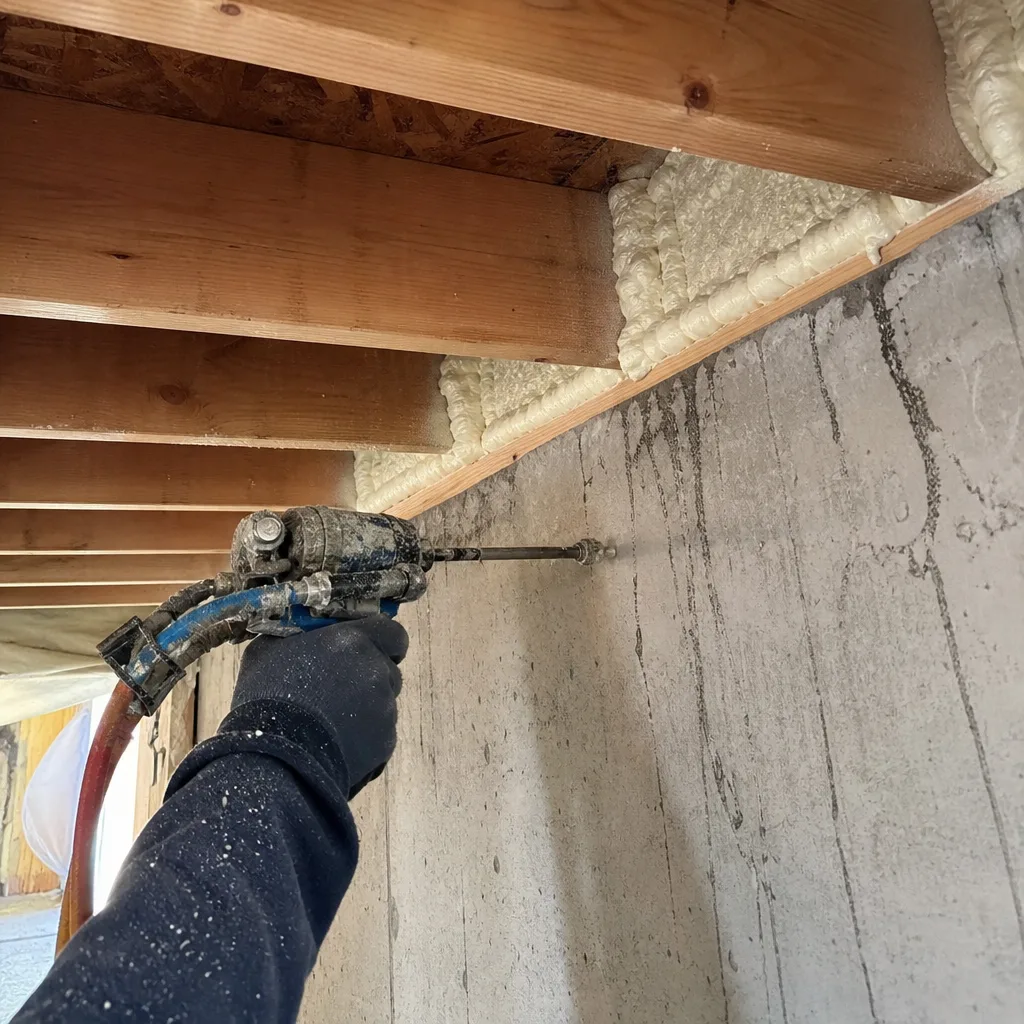
When removal is the right call, our crews reinstall with materials from spray foam insulation in Paradise systems like Icynene or Demilec in the lid where air sealing matters most, and products like GreenFiber or Owens Corning in the flat sections after air sealing. Materials matter, but the air sealing underneath matters more.
Was the Last Contractor’s Job the Problem?
Half the “insulation failure” jobs we walk in Paradise turn out to be installation problems, not material problems. The material was fine. The install wasn’t. Red flags to look for in the attic:
- Coverage that clearly skipped the eaves. A rushed installer stops when the visual from the hatch looks full and leaves the outer three feet thin.
- Barriers around can lights or HVAC equipment missing or wrong. Recessed lights need the right kind of cover; HVAC gear needs a solid dam and clearance. Blown over them is a code and safety issue.
- No air sealing underneath. If the top plates and penetrations weren’t sealed before the blown-in went down, the material is chasing leaks, not stopping them.
- Baffles crushed or missing at the vents. That compromises attic ventilation and can drive moisture problems.
- Depth markings absent. A careful installer leaves depth markers at intervals so the homeowner (and the next inspector) can see what was targeted.
If you’re seeing two or more of these, it’s worth a second opinion before you spend money on more material. A fresh top-off on top of a bad install just buries the problems. For deeper context on what goes into a proper attic job, our overview of Walt’s Insulation Paradise home walks through the standard we install to.
Common Mistakes to Avoid
- Judging the attic from the hatch. The most expensive problems we find in Paradise – moisture channels, compressed pockets, pest runs – are almost never visible from the ladder. Walk it.
- Top-off before air sealing. Adding blown-in over unsealed penetrations in a Paradise attic is like putting a thicker blanket over an open window. Seal first, then insulate.
- Ignoring the smell. A musty note in the back bedroom or hallway often traces to the attic, not the carpet. Most homeowners chase the wrong source for months.
- Hiring based on the lowest line item only. A quote that doesn’t include air sealing, baffles, and can-light covers isn’t going to fix uneven temperatures – it’s just going to add depth.
- Trusting a truck without an address. If a contractor can’t hand you a published address, license number, and a written estimate you can hold onto, keep looking. In Paradise, that’s only gotten more important in the last few years.
- Forgetting the crawl space. Attic and crawl space encapsulation & vapor barrier in Paradise work together. Moisture from below can travel up through the house and end up in the attic insulation. If you’re seeing attic moisture signs, the crawl space is the next place to look.
- Adding insulation over obvious ice dams without addressing ventilation. Ice dams are a heat-leak symptom, not just an insulation-depth symptom. Fix the source.
When to Call a Professional
Call us when you see moisture signs, rodent damage, ice dams that keep returning, or a room that hasn’t been comfortable in years. Call us when a prior contractor’s work looks wrong and you’re not sure what a fair fix looks like. Call us when you’re ready to top off and want the air sealing done right the first time. Some homeowners can safely do a visual inspection themselves; walking the attic to confirm the diagnosis and design the fix is where we earn our keep. Our technicians have up to 26 years of experience and see this stuff every week in Paradise. Walt’s Insulation Paradise offers free estimates in Paradise – call (844) 978-0556 and a live person picks up, day or night. We’re the one down the road, not the one you can’t reach.
Frequently Asked Questions
Losing R-value, holding moisture, or having been installed incorrectly. The household signs are a hot second floor, uneven room temperatures, unexplained utility bill jumps, a musty smell, and ice dams. If you see any of these, get the attic checked before adding more material.
Typically 20 to 30 years for cellulose installed correctly and kept dry, and longer for fiberglass. In our climate, the limiting factor is almost always moisture from a roof-detail failure or pest activity, not age. Dry insulation holds its R-value for a long time; wet insulation doesn’t.
Sometimes – and only if the existing material is dry, uniform, and not contaminated. In that case a top-off is one of the best value moves a Paradise homeowner can make. If there’s moisture, compaction, or pest damage, top-off traps the problem. Call (844) 978-0556 for a free estimate and we’ll tell you honestly which one you’re looking at.
It does, but not the way you might expect. Cellulose settles 15-20% in the first year and stabilizes; that’s expected and priced in. Real R-value loss comes from settling beyond target, compaction from moisture, or gaps in coverage – not from material “wearing out.”
Almost always moisture: a roof leak, blocked vents, or a compromised vapor barrier from the crawl space below. The dry heat hides the water, but the smell stays. That’s not a “wait until fall” problem – get it checked before monsoon season returns. Call us for a free estimate and we’ll pinpoint the source.
Replace if it’s wet, contaminated, or compacted in patches. Top off if it’s dry, uniformly settled within 25%, and the attic has been air sealed first. In our experience most Paradise cases come down to moisture: if the attic is dry, top off; if it’s not, replace. Either way, call (844) 978-0556 for an honest assessment.
The Bottom Line
Blown-in insulation warns you early if you know where to listen – and the signals show up in your comfort and your energy bill long before anything is visibly wrong. Check for the five household signs, walk the attic in at least six spots, and treat moisture as the one symptom that flips a top-off into a replacement. If you live in Paradise and something in this guide hit close to home, don’t wait for the next $180 bill jump. A free estimate from a local shop with a real address, a real license number, and the Done Right Promise on every job is the fastest way to know for sure. Call (844) 978-0556 and a live person will pick up.
Written by the team at Walt’s Insulation Paradise.