
Last updated November 18, 2026
The Complete Attic Insulation Guide for Paradise Homeowners
Attic air temperatures in Paradise can exceed 160°F in July, hot enough to melt the performance out of insulation products that were tested in far milder climates. Then January nights drop below freezing, and the same attic has to hold heat in. That swing is why generic attic insulation guides steer Paradise homeowners wrong. This guide covers what actually works here: Nevada’s Title 24 R-value floor, the ventilation problems common to older Clark County tract homes, when to insulate the attic floor versus the roof deck, and why radiant barrier foil alone won’t save you. You’ll finish knowing what to ask for, what to refuse, and what a fair quote looks like in Paradise.
Quick Answer
In Paradise, the minimum attic insulation you should consider is R-38 under Nevada’s Title 24 energy code, and R-49 or better is wise given the 160°F summer attic heat. Most homeowners need air sealing before adding insulation, and many older tract homes also need their soffit and ridge ventilation cleared. The right approach combines mass insulation with proper ventilation and, in some homes, a radiant barrier.
Table of Contents
- Why Nevada’s Title 24 Sets a Different R-Value Floor
- The Dual-Season Temperature Swing Problem
- Blocked Ventilation in Older Paradise Tract Homes
- Attic Floor or Roof Deck: What Your Home’s Era Tells You
- Radiant Barrier: Not a Substitute for Mass Insulation
- Choosing Materials: Fiberglass, Cellulose, or Foam
- What a Proper Attic Insulation Job Looks Like
- Common Mistakes to Avoid
Why Nevada’s Title 24 Sets a Different R-Value Floor
If you’ve read a national insulation guide that told you R-30 is fine for a hot climate, that advice doesn’t apply to Paradise. Nevada’s Title 24 energy code sets a minimum attic insulation value for this climate zone, and the current standard calls for R-38 at the attic floor. That’s a floor, not a target. In our experience working in Paradise attics, homes that start at R-38 and get bumped to R-49 or R-50 hold interior temperatures more evenly and run the AC noticeably less in August.
Here’s what a fair R-value target looks like for Paradise homes:
- Existing attic, minimal insulation: R-38 minimum to meet Title 24; R-49 preferred
- Existing attic, R-19 or better: top up to R-49, seal first
- New construction in Clark County: R-38 per Title 24 prescriptive path, but many builders go higher for comfort
- Crawl space under a Paradise home: R-13 to R-19 on the crawl space walls if the floor above is over unconditioned space
NV Energy also runs efficiency rebate programs that can offset part of a qualifying insulation upgrade. Ask any contractor you speak with whether the job will qualify and how the paperwork is handled, because the rebate process is where estimates often go sideways. A contractor who can’t explain the Title 24 minimum or the NV Energy rebate path for Paradise is telling you they don’t work here much.
The Dual-Season Temperature Swing Problem
Paradise isn’t Phoenix. Phoenix attics bake but rarely freeze. Paradise attics bake and freeze, sometimes within the same month. That thermal whiplash is the defining insulation challenge in Paradise, and it changes what you should install.
In July, a west-facing roof deck in Paradise can hit 160°F while the conditioned space below sits at 75°F. That’s an 85°F difference across the ceiling plane. Insulation slows that heat, but cheap batts with a low R-value per inch simply can’t keep up. By January, the same attic needs to keep 65°F air in the house while the outside drops to 28°F or below.
Products tested in pure desert conditions sometimes perform worse in cold snaps, and products designed for cold climates can sag or lose effective R-value in extreme heat. What we look for in Paradise:
- Blown fiberglass (Owens Corning, Johns Manville): stable in both seasons, holds R-value, doesn’t settle much
- Blown cellulose (GreenFiber): better cold-weather performance, more settling over time, needs denser application
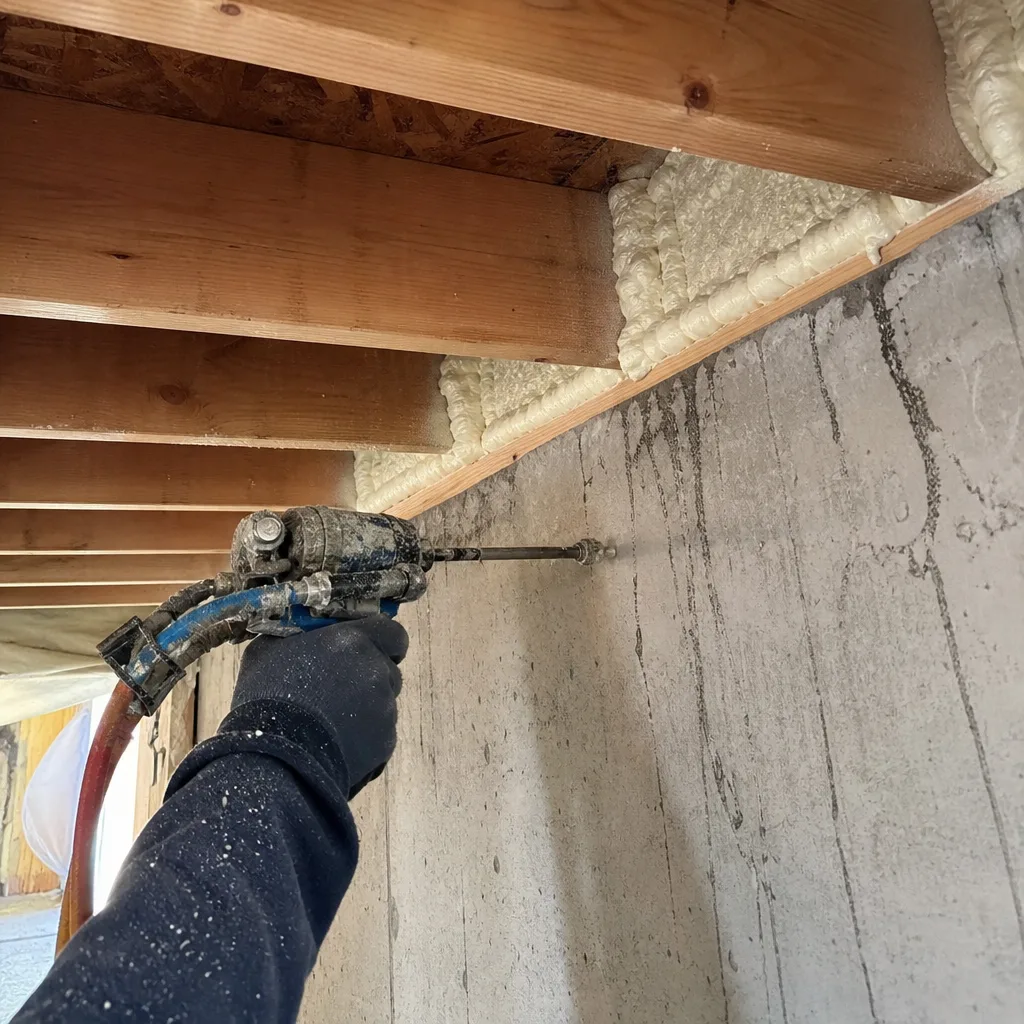
- Spray foam (Icynene, Demilec): best air sealing, works in both seasons, but the highest cost and requires an experienced installer
The takeaway: pick a product that holds its R-value at both 160°F and 28°F, and have the attic air-sealed before anything goes in. Without sealing, even R-60 won’t stop Paradise heat from leaking through gaps around can lights and top plates.
Blocked Ventilation in Older Paradise Tract Homes
We can’t count how many times we’ve opened a Paradise attic and found blown insulation covering every soffit baffle. It’s one of the most common defects in homes built in Clark County between the late 1980s and early 2000s. The installer blew insulation to hit R-38 and didn’t care where it landed, or the baffles were never installed to begin with.
What happens when soffit and ridge vents are blocked:
- Attic air can’t vent heat, so it climbs past 160°F even on mild days
- Moisture from the house collects on the underside of the roof deck and can grow mold or rot
- Insulation near the blocked vents loses effectiveness as it bakes in trapped heat
- Ice dams aren’t a concern in Paradise, but summer shingle failure definitely is
If you’re looking up into a Paradise attic and can’t see daylight at the soffits or under the ridge vent, that needs to be fixed before new insulation goes in. This is one of the reasons we tell homeowners to get the attic checked before the first hot week in May, when contractors in Paradise are already busy.
Attic Floor or Roof Deck: What Your Home’s Era Tells You
Whether you insulate the attic floor or the roof deck depends on how your Paradise home was built and how you use the attic. There’s no universal answer, but the home’s construction era gives you a strong starting signal.
- Pre-1980 homes (often in older Paradise neighborhoods): usually have thin attic floors, poor air sealing, and marginal soffit ventilation. Floor insulation plus air sealing usually gives the best return.
- 1980s-2000s tract homes (common across Clark County): often at R-19 or R-30 with blocked vents. Topping up to R-49 plus clearing ventilation is the typical plan.
- 2000s-and-newer homes with HVAC in the attic: insulating the roof deck with spray foam keeps the equipment inside the thermal envelope, which matters more than attic floor R-value.
- Homes with a conditioned attic (office, storage, HVAC): the roof deck gets insulated, not the floor.
The one rule that holds across every Paradise home: air sealing comes before insulation, every time. If you skip the sealing and just blow fiberglass over the top plate gaps, you’ve spent money and gained little. Our attic insulation service in Paradise always starts with a full inspection and air sealing plan before any product goes down.
Radiant Barrier: Not a Substitute for Mass Insulation
Radiant barrier foil reflects radiant heat. It does not stop conductive or convective heat, and it does not replace mass insulation. This is where a lot of Paradise homeowners get sold the wrong product.
Here’s the honest breakdown:
- Radiant barrier alone: can knock 10-20°F off peak attic air temperature, doesn’t change the R-value of your attic
- Mass insulation alone (R-38 to R-49): handles conduction and convection, which is where most of your cooling loss goes
- Combined properly: meaningful summer savings, especially in attics with HVAC equipment or ducts running through them
When does combining radiant barrier and mass insulation pay off in Paradise? When the ducts run through the attic and you can’t move them under the insulation. The foil keeps attic temps down so the duct loses less cooling. That’s a real benefit. It’s not a replacement for R-49 in the ceiling plane. If a contractor in Paradise tells you a radiant barrier alone will solve your comfort problems, get a second opinion. Our spray foam insulation in Paradise service is a different tool for a different problem: it air-seals and insulates in one pass and often outperforms foil-plus-batt in attics with complicated roof geometry.
Choosing Materials: Fiberglass, Cellulose, or Foam
There’s no single right product for every Paradise home. Here’s how the main options compare for this climate.
- Blown fiberglass (Owens Corning, Johns Manville): widely used in Paradise, stable in heat, non-combustible, resists settling, budget-friendly at attic-floor R-values.
- Blown cellulose (GreenFiber): recycled content, better cold-weather R-value per inch, needs careful installation to avoid settling past spec in the heat.
- Open-cell spray foam (Icynene): air-seals and insulates, works in the roof deck and wall cavities, good for Paradise homes with complex attic geometry or ducts in the envelope.
- Closed-cell spray foam (Demilec): higher R-value per inch, vapor barrier built in, best for roof deck applications and the crawl space ceiling.
Beyond the attic, crawl space work is often necessary in Paradise homes on pier-and-beam foundations. The dual-season swing hits crawl spaces hard too, and a moisture barrier is the cheapest insurance against floor squeaks and rot. If your home has a crawl space, plan to look at both areas in one visit, and check our crawl space encapsulation and vapor barrier service in Paradise while you’re at it.
What a Proper Attic Insulation Job Looks Like
Here’s the step-by-step we follow on a Paradise attic job. If you get an estimate from anyone and their process doesn’t look like this, ask why.
- Inspection and measurement. We measure existing R-value, check for air leaks, look at soffit and ridge ventilation, and confirm whether ducts run through the attic.
- Air sealing. Seal top plate penetrations, can light housings, plumbing chases, and any wiring holes with foam or caulk before any insulation goes down.
- Ventilation correction. Install or clear soffit baffles and confirm the ridge vent is open. Blocked vents are the most common defect we see in Paradise.
- Insulation installation to spec. Blown or spray foam applied to a measured depth and R-value target, with a written spec you can hold us to.
- Verification. R-value checked at multiple points, photos taken, and a written report left with the homeowner.
- Cleanup and walkthrough. Attic access sealed, dust contained, and a walkthrough of what was done and why.
This process is why we back the work with the Done Right Promise: if it’s not done right, we make it right. Same for our crawl space work and any service you’re looking at across the Paradise area.
Common Mistakes to Avoid
- Insulating before sealing. If the air leaks around top plates and can lights aren’t sealed, the new insulation won’t fix your cooling bill. We see this in Paradise all the time.
- Burying the soffit baffles. Many Clark County tract homes have this defect from the original install. Clear the vents before adding anything.
- Choosing a contractor who won’t measure. If they quote R-value without opening the attic, that’s a red flag. Every honest Paradise quote starts in the attic.
- Buying radiant barrier as a standalone fix. Foil alone doesn’t replace mass insulation. It’s a supplement, not a substitute.
- Ignoring the crawl space. In Paradise, half the comfort story is under the house, not over it. A wet crawl space undercuts any attic work.
- Trusting a contractor with no local address. Paradise has a lot of storm-chasing contractors after every event. A published address and a license number you can look up matter here.
- Forgetting the NV Energy rebate paperwork. Your contractor should know the program and help file it. Missing that step costs you real money.
When to Call a Professional
Call a professional if any of these apply in your Paradise home: your summer cooling bills keep climbing and the HVAC unit checks out fine, you notice hot ceilings upstairs on July afternoons, you’ve spotted water stains or sagging on the attic floor, your attic insulation is visibly below R-30, or vents look blocked when you look up through the access panel. Also call a pro if you’re planning to add insulation without knowing your current R-value, or if you’re considering spray foam in the roof deck; that’s not a DIY product and it’s not forgiving of installation mistakes. Off-gassing, overspray, and inadequate ventilation during cure are real risks in a closed attic. Walt’s Insulation Paradise offers free estimates in Paradise; call (844) 978-0556 and a live person will pick up.
Frequently Asked Questions
Nevada’s Title 24 energy code sets the minimum attic insulation value at R-38 in this climate zone, and R-49 or R-50 is a better target for most Paradise homes given the 160°F summer attic heat and the winter cold snaps. Call (844) 978-0556 for a free assessment of what your attic currently has.
In the Paradise market, a typical attic-floor insulation upgrade for a 1,500-square-foot home runs roughly $1,800 to $3,200 installed, depending on whether air sealing and ventilation work are included and which product goes in. Spray foam in the roof deck generally runs $3.50-$5.50 per square foot of roof area. Call (844) 978-0556 for an exact quote; estimates are free.
If your existing insulation is intact and simply below the R-value target, topping up is cheaper than full replacement, usually by 40% or more. If it’s contaminated, wet, or crushed down from age, full removal and replacement is the right call. In Paradise, compressed or rodent-contaminated insulation is the most common reason we recommend a full replacement.
Only in combination with mass insulation, never as a substitute. If your ducts run through the attic, a radiant barrier plus R-49 mass insulation is a good combination for Paradise heat. A radiant barrier alone won’t fix comfort problems.
It’s a common defect in Clark County homes built from the late 1980s through the early 2000s, where the original installer blew insulation past the soffit baffles or skipped the baffles entirely. The fix is to clear the vents and install proper baffles before topping up insulation. We see this in Paradise on a regular basis.
Yes, most attic insulation jobs in Paradise are completed in a single day, and we can often schedule within the same week. Call (844) 978-0556 and we’ll give you a straight answer on timing.
The Bottom Line
Paradise isn’t a pure desert and it isn’t a cold climate. It’s a thermal-whiplash zone where a single attic hits 160°F in July and swings below freezing in January. The right approach for a Paradise home is R-38 minimum, R-49 or better preferred, air sealing before insulation, cleared soffit and ridge ventilation, and materials chosen for both seasons. Radiant barrier has a role, but only alongside mass insulation. Crawl space work matters here too. If you’re ready to know what your attic actually needs, call (844) 978-0556 for a free estimate in Paradise. Our technicians have up to 26 years of experience, calls are answered by a live person 24/7, and every job is backed by the Done Right Promise. Ask about the free second opinion on any written estimate, the $40 off any repair over $200, the no-trip-charge offer inside our service county, and the permanent 10% discount for seniors and veterans.
Written by the team at Walt’s Insulation Paradise.