
Last updated November 18, 2026
The Complete Guide to Insulation in Paradise
Most insulation guides written for Nevada were written by someone who has never stood in a Paradise attic in July, where ambient temperatures routinely push past 160°F. That kind of heat changes the math on R-values, material choice, and where your cooling dollars actually leak out. Paradise isn’t a stand-in for “the desert Southwest,” and it isn’t Las Vegas with a different mailing address. It’s a specific place heating up next to the Strip, with housing stock that ranges from 1960s tract homes to newer builds near the airport corridor. This guide walks through what insulation actually works here, what Clark County code requires versus what performs, and the spots most Paradise homeowners never think to seal.
Quick Answer
For most Paradise homes, the right insulation package means attic R-values well above Clark County’s minimum, air sealing before you add any material, and a moisture strategy for the crawl space. Blown-in fiberglass or cellulose handles most attics well; spray foam earns its cost in older homes with hard-to-reach cavities and duct chases. Code minimum passes inspection. It rarely keeps a Paradise home comfortable through August.
Table of Contents
- Why Paradise’s Heat Island Changes Your R-Value Math
- Clark County Code vs. What Actually Performs in Paradise
- Desert Temperature Swings and Long-Term Material Durability
- Material-by-Material Ranking for Paradise Conditions
- The Top Plate Gap: The 20% Most Homeowners Miss
- Paradise Housing Stock: What Your Build Date Tells You
- Crawl Spaces and Vapor Barriers in Paradise
- Common Mistakes to Avoid
Why Paradise’s Heat Island Changes Your R-Value Math
Paradise sits directly against the Las Vegas Strip, which means it absorbs heat from one of the most concentrated urban heat islands in the country. All that concrete, asphalt, and glass on the Strip holds daytime heat and releases it slowly overnight. Neighborhoods close to the Strip, including areas around Paradise Road and the Convention Center corridor, run measurably hotter than outlying parts of the valley. That matters because attic temperatures drive how hard your HVAC system has to work.
When outdoor temps hit 105°F, an unshaded Paradise attic can reach 160°F or higher. Standard national R-value tables assume an attic that’s maybe 130°F. The gap between those numbers is real heat load, and it’s why homes here that hit the code minimum still feel under-insulated from June through September.
In our experience working Paradise attics, we’ve learned to treat R-49 as a floor for older homes and R-60 as a better target for anything we’re upgrading. That’s ahead of what code asks. It’s also what the local thermal reality calls for.
Three things raise attic heat specifically in Paradise:
- Proximity to the Strip: the closer your home sits to the resort corridor, the more ambient heat you inherit from surrounding pavement and structures.
- Roof color and pitch: dark shingles on a low-pitch roof trap more heat than lighter, steeper roofs a few blocks away.
- Attic ventilation: many Paradise homes were built with under-sized soffit or ridge vents, so hot air lingers instead of venting.
If your attic is doing its job, your HVAC runs less. If it isn’t, your system pays the difference every afternoon in July. Learn more in our Attic Insulation in Paradise guide.
Clark County Code vs. What Actually Performs in Paradise
Clark County code for new construction requires attic insulation that meets current energy standards, typically R-38 to R-49 depending on the assembly. That’s a passing grade, not an optimal one. The code was written for a general desert climate, not specifically for Paradise heat loads. Passing inspection and living comfortably are two different outcomes.
The gap between code and performance widens sharply in homes built before 2005. Older Paradise homes were often insulated at R-19 to R-30, sometimes with batts that have since settled, compressed, or been disturbed by prior HVAC work. In some cases, we find batts that were never installed flush to the joists, leaving air gaps that the nominal R-value never accounted for.
Here’s how we think about it for a Paradise home:
- Code minimum (R-38): the floor for inspection. Adequate for a newer, well-sealed home on a shaded lot.
- Practical target (R-49): where most Paradise homes should land to keep HVAC load reasonable.
- High-performance target (R-60): recommended for older homes with ductwork in the attic, low-pitch roofs, or heavy sun exposure.
If you’re not sure which bracket your Paradise home falls into, a home energy audit answers that in a couple of hours. We offer them as part of our insulation services, and we’ll tell you straight whether your attic needs work or whether it’s fine.
Desert Temperature Swings and Long-Term Material Durability
Paradise days are hot. Paradise nights, especially in winter, can drop 30 to 40 degrees. That daily expansion and contraction cycle is a slow stress test on every material in your building envelope. Insulation that looks fine in year one can degrade or settle by year eight if it wasn’t the right choice for this climate.
What this means, practically:
- Loose-fill settles. Blown-in fiberglass and cellulose both lose some depth over time as the material compacts. Re-checking attic depth every five to seven years is smart in Paradise.
- Foam board can crack. Rigid boards installed without proper movement allowance can crack at seams after repeated thermal cycling.
- Spray foam handles cycling best. Closed-cell spray foam bonds to the substrate and moves with it, which is why it holds up well in Paradise attics with extreme day-night shifts.
- Batt insulation compresses. Fibrous batts get compressed by attic traffic, HVAC installers, and rodent activity. Once compressed, R-value drops and doesn’t recover.
The takeaway: anything installed in a Paradise attic needs to survive decades of temperature cycling, not just one summer. Material choice matters more here than in climates with narrower swings.
Material-by-Material Ranking for Paradise Conditions
Here’s how the main insulation types stack up specifically for Paradise, ranked by how well they hold up to the local heat, cycling, and housing stock:
1. Spray Foam (Closed-Cell)
The strongest performer in Paradise attics, especially in older homes with irregular framing, duct chases, and balloon framing. Closed-cell foam from Icynene or Demilec creates a sealed, air-impermeable barrier and survives the day-night cycling well. It’s also the best answer when your attic has been hard to insulate with loose material because of obstructions. Learn more in our Spray Foam Insulation in Paradise guide.
2. Blown-In Fiberglass or Cellulose
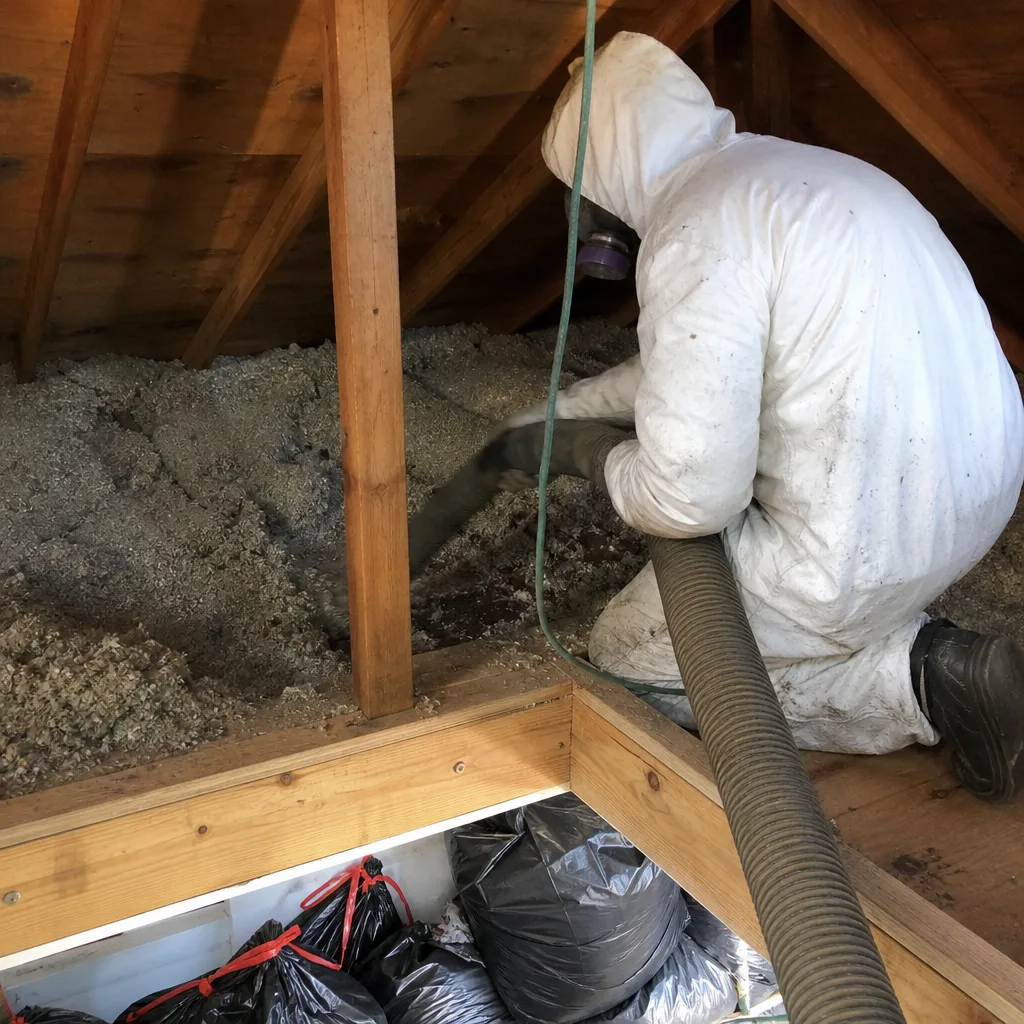
The best value for most Paradise attics with standard open framing. Owens Corning and Johns Manville fiberglass, or GreenFiber cellulose, installs quickly and reaches R-49 or R-60 easily. The catch: it settles, and it needs air sealing first to perform well. Good for newer homes with simple attics.
3. Batt Insulation
Batt works fine in walls and new construction where the framing is tight and access is good. In Paradise attics with heat cycling and lots of HVAC interruptions, batts compress and lose R-value faster than loose-fill. Rockwool batts resist moisture and compression better than fiberglass, which makes them the better batt choice for Paradise walls.
4. Radiant Barriers
A radiant barrier isn’t insulation, but in Paradise it’s a real supplement, especially on homes with ductwork running through a hot attic. It reflects radiant heat before it enters the attic space. Pair it with good attic insulation and ventilation for the full effect, not as a replacement.
We install products from Owens Corning, Johns Manville, Knauf, Rockwool, Icynene, Demilec, CertainTeed, and GreenFiber. The right pick depends on your attic, not on what’s easiest to sell.
The Top Plate Gap: The 20% Most Homeowners Miss
Here’s the spot that most Paradise homeowners never insulate, and it costs them real money: the gap between the top plate of your wall framing and the bottom of the drywall. It’s typically hidden behind the drywall, above cabinets, in exterior wall corners, or up in the attic where the wall meets the ceiling.
That gap is where air moves freely between your conditioned living space and the attic or outside. It can account for up to 20% of HVAC loss in a Paradise home. Insulation alone won’t fix it, because insulation resists conduction but doesn’t stop air movement. Air sealing does.
What we do as part of a proper attic job:
- Locate the top plate along every exterior wall and identify gaps.
- Fill and seal with spray foam or caulk rated for the temperature range.
- Address other air bypasses at the same time: recessed lights, bath fans, plumbing penetrations, and electrical boxes.
- Then add insulation on top of a sealed attic floor.
Skipping step one is the single most common reason a new insulation job underperforms in Paradise. The new material goes in, the house still feels warm in July, and the homeowner assumes insulation “doesn’t work.” It does. Air sealing just wasn’t done.
Paradise Housing Stock: What Your Build Date Tells You
Paradise was built out over several decades, and the age of your home tells you a lot about what insulation issues you’re likely to face.
- Pre-1980 homes: expect thin or missing attic insulation, unsealed top plates, and possible vermiculite or older materials that need professional assessment before disturbance. These homes also tend to have ductwork routed through hot attics, which is a big performance hit in Paradise.
- 1980s and 1990s homes: typically R-19 to R-30 in the attic, often settled or compressed. Batt insulation in walls with some gaps around windows and doors. Upgrading insulation and air sealing together usually pays back fastest.
- 2000-2005 homes: often closer to code minimum, but with framing practices and duct layouts that still benefit from air sealing upgrades and a jump toward R-49.
- Post-2005 homes: usually close to code, sometimes fine as built. A home energy audit will tell you whether upgrades are worth it or unnecessary.
If you’re in a Paradise neighborhood with a lot of similarly aged homes, like the tracts near the Boulevard Mall corridor or the older pockets near Flamingo, your neighbors likely have the same insulation issues. Working on one home often leads to a conversation about the next.
Crawl Spaces and Vapor Barriers in Paradise
Not every Paradise home has a crawl space, but the ones that do face a specific issue: moisture wicking up from soil below, combined with extreme heat above. That combination produces high humidity in the crawl space, which works its way up into the living space and puts strain on your HVAC system.
The fix is a sealed vapor barrier and, where appropriate, encapsulation. A properly installed vapor barrier rated for the desert climate keeps ground moisture out of the home and protects joists and subfloor framing. Cheap 4-mil plastic from a hardware store won’t do the job in Paradise because it tears and degrades under the temperature swings.
We install full encapsulation systems and heavy-duty vapor barriers, and we recommend them for any Paradise home with visible moisture, wood rot, or musty smells rising from below. If you want the technical walkthrough, our Crawl Space Encapsulation & Vapor Barrier in Paradise page covers the full process.
Common Mistakes to Avoid
- Insulating before air sealing. Adding R-value on top of an unsealed attic floor leaves the air leaks intact. Air seal first, then insulate. Every time.
- Trusting the R-value on the label. Manufacturer R-values assume the material was installed at the rated thickness and hasn’t been disturbed. Settled batts and blown-in lose R-value over time in Paradise’s heat.
- Skipping the top plate gap. The 20% HVAC loss most Paradise homeowners never address. Insulation doesn’t seal air movement. Air sealing does.
- Using low-mil vapor barriers in crawl spaces. 4-mil plastic tears and degrades. In a Paradise crawl space, you need a heavy-duty barrier rated for the temperature swings.
- Ignoring attic ventilation. If your soffit or ridge vents are blocked, added insulation traps heat rather than resisting it. Check ventilation before an insulation upgrade.
- Not checking for rodent damage. Many Paradise attics have had rodents nest in insulation and contaminate it. Insulation removal and replacement is sometimes the right move before new material goes in.
- Going with the cheapest quote. In Paradise, cheap insulation jobs are usually batts laid over old material with no air sealing and no ventilation check. The material cost was low because the work wasn’t done.
When to Call a Professional
Some insulation jobs are homeowner-safe, like adding a fresh layer of blown-in on top of a well-sealed attic with clear access and no surprises. Most aren’t. If your attic has heat stress, older materials of uncertain origin, rodent contamination, or existing spray foam that needs assessment, get a trained professional on site. Crawl space work, vapor barrier installation, and spray foam application all involve real safety considerations: chemical exposure, confined space work, and high attic temperatures that can cause heat illness fast. Don’t do these yourself.
Walt’s Insulation Paradise offers free estimates in Paradise. Call (844) 978-0556 and we’ll send a technician out to look, measure, and give you a written scope. No trip charge inside our service county, and if you’ve got another written estimate, we’ll give you a free second opinion on it. Technicians have up to 26 years of experience, and every visit is a live call away because our phones get answered 24/7. Learn more about our home services and local coverage on the Walt’s Insulation Paradise home page.
Frequently Asked Questions
For a typical Paradise home, blown-in attic insulation with air sealing runs roughly $2,500 to $5,500 depending on square footage, existing material, and target R-value. Spray foam costs more per square foot but can be the better answer in older homes with complex attic framing. Call (844) 978-0556 for an exact quote. Estimates are free.
Usually, yes. Clark County code is a floor, not an optimum. Because Paradise’s attic temperatures run well above what national R-value tables assume, most homes here perform better at R-49 or R-60 in the attic than at the code minimum of R-38. A home energy audit tells you exactly where you stand.
Blown-in fiberglass or cellulose is the best value for most attics with standard framing. Closed-cell spray foam is the strongest answer for older homes with irregular framing, duct chases, or hard-to-reach areas. The right choice depends on the attic, not on the material’s marketing.
It’s the gap between your wall’s top plate and the bottom of the drywall, hidden in corners and along exterior walls. It’s a major air leak that can account for up to 20% of your HVAC loss in a Paradise home. Air sealing that gap, along with other attic bypasses, is one of the highest-payback jobs you can do here.
Most blown-in attic insulation jobs with air sealing finish in a single day. Spray foam jobs sometimes run into a second day depending on attic size and complexity. Crawl space encapsulation typically runs one to two days. Call (844) 978-0556 and we’ll give you a clearer timeline for your specific home.
Yes, meaningfully, when it’s done as a system: air sealing, proper R-value, ventilation check, and top-plate sealing together. Insulation alone, without air sealing, leaves the leaks in place and your bill stays high. Our team has watched this play out in Paradise homes for years, and it’s why we always quote air sealing alongside insulation.
The Bottom Line
Paradise isn’t a generic desert climate, and generic insulation advice doesn’t serve Paradise homeowners well. The heat island from the Strip, the day-night temperature swings, the code minimums that pass inspection but underperform, and the top plate gap that quietly steals a fifth of your HVAC efficiency all point the same direction: get the specifics right for your home. Air seal first. Pick a material that fits your attic and your build date. Go above code for the attic. Seal the crawl space properly if you have one. If you’re not sure where to start, call (844) 978-0556. Walt’s Insulation Paradise will send a background-checked, uniformed technician out for a free estimate, and every job we do is backed by the Done Right Promise. If it’s not done right, we make it right. That’s what being the one down the road means.
Written by the team at Walt’s Insulation Paradise.