
Last updated November 18, 2026
Blown-In Insulation Maintenance Schedule: What to Do and When
Most blown-in insulation failures we see in Paradise attics weren’t caused by bad installation. They were caused by nobody checking on the insulation for 10 years after a perfect install. That’s the part nobody tells you when the crew packs up and drives away: the material is durable, but the house around it moves, settles, and takes on moisture. Your insulation is a system, and systems need a look now and then.
This guide gives you an honest calendar. Fifteen minutes once a year, one extra check after the summer monsoon, and you’ll catch almost every problem before it costs you real money. We’ll cover what you can inspect yourself, what needs a trained eye, and the exact signs that a routine check has turned into a repair or top-off job. Paradise homeowners deal with a specific climate, and the schedule here is built around it.
Quick Answer
Blown-in insulation needs a visual attic inspection once a year, ideally in early fall before heating season, plus one quick check after Southern Nevada’s monsoon moisture in late summer. A homeowner can handle the basic depth, moisture, and pest check with a ruler and a flashlight in about 15 minutes. Anything involving compressed R-value, wet material, or air leaks around penetrations should go to a professional.
Table of Contents
- The Once-a-Year 15-Minute Attic Check
- Why Paradise Heat Cycles Make Cellulose and Fiberglass Settle Differently
- The Monsoon Trigger: Your Unscheduled Summer Check
- How to Document R-Value Depth With a Ruler and a Photo
- What You Can Check Yourself vs. What Needs a Pro
- When Maintenance Becomes a Repair or Top-Off
- What Top-Offs and Repairs Realistically Cost in Paradise
The Once-a-Year 15-Minute Attic Check
Set a reminder for the first cool week of October. That’s the sweet spot in Paradise: the attic is bearable to stand in, and you’re inspecting right before the material starts doing its real work for the winter. Grab a flashlight, a tape measure or a marked stick, and your phone for photos.
Work through this in order:
- Look at the depth first. Measure from the top of the ceiling joist to the top of the insulation in three or four spots. Write the numbers down. Don’t judge by feel.
- Check for moisture. Run your hand along the underside of the roof deck and the tops of the joists. Damp, cool, or dark-stained wood is a flag. Look for rust on nail heads.
- Scan for pest evidence. Droppings, chewed material, tunnels through the insulation, or a strong odor. Rodents love undisturbed fiberglass and cellulose.
- Look for settling and gaps. Insulation should be level and even. Sagging pockets, bare patches, or material that’s pulled away from the edges tell you something shifted.
- Check penetrations. Recessed lights, plumbing stacks, duct boots, and wiring holes are where air leaks start. Feel for drafts on a windy day.
- Snap photos. Wide shot of the whole attic, close-ups of your depth measurements, and any problem area. More on this below.
That’s the whole routine. Fifteen minutes, no tools beyond a flashlight and a tape. If everything looks level, dry, and pest-free, you’re done for the year. If you already suspect your attic is under-insulated, it’s worth pairing this check with a proper home energy audit from Walt’s Insulation Paradise.
Why Paradise Heat Cycles Make Cellulose and Fiberglass Settle Differently
This is the part most maintenance guides skip, and it matters in Paradise specifically. Attics here bake at 140°F and above through July and August, then cool off fast overnight. Material expands and contracts with that swing, and the two common blown-in types respond differently.
Cellulose is denser and heavier. It settles more over time, and in a hot climate the settling accelerates. The fibers compress under their own weight, especially in the first two years after install. That means your R-value drops quietly. A cellulose attic that measured R-38 on day one can be measurably thinner a few summers later. Cellulose is also treated for fire resistance, but it’s more moisture-sensitive than fiberglass, which is why the monsoon check below matters so much for homes with cellulose up top.
Fiberglass (products like CertainTeed and Knauf are common) is lighter and resists settling better, but it’s less forgiving about air movement. Wind-washing and gaps at the eaves can hollow out sections faster than you’d expect. If you have a mix, like fiberglass over an older cellulose layer, the two can settle into each other and you get a thinner total than either would show alone.
Rockwool, by contrast, holds its shape and density well and isn’t as prone to settling. If you’ve upgraded to a denser mineral wool product, your check can be lighter on the depth-measuring and heavier on the airflow gaps. Whichever material is in your attic, the practical takeaway is the same: measure every fall, because settling is invisible until you put a ruler against it.
The Monsoon Trigger: Your Unscheduled Summer Check
Southern Nevada doesn’t get much rain, but when it comes, it comes hard and fast. The monsoon season runs roughly July through September, and in Paradise it means sudden downpours driven sideways by wind. That kind of storm finds every weak point in a roof and a vent.
Within a week of any heavy monsoon storm, do a quick walkthrough. You don’t need to redo the full inspection; you just want to catch moisture before it becomes a mold or rot problem:
- Look for dark, damp patches on the roof deck and joists.
- Check for water stains on the ceiling below the attic (this often shows up before the attic itself looks wet).
- Smell the attic. A musty or earthy odor is a moisture signal even if you don’t see stains.
- Check that insulation near roof vents and eaves hasn’t been blown aside or soaked.
One storm check per summer, more if you get several big ones. Wet insulation loses R-value fast and can turn a routine top-off into a full removal and replacement job. Catching it early is the whole game.
How to Document R-Value Depth With a Ruler and a Photo
This is the single habit we wish every homeowner kept, because it protects you twice: once at warranty time, once at resale.
Here’s the system:
- Mark your measuring stick. A cheap yardstick or a piece of scrap lumber works. Put a pencil line at each common R-value depth. For fiberglass and cellulose, roughly 10 to 11 inches reads near R-30 in a vented attic, and 15 to 16 inches near R-49. (Layout note: use the R-value chart for your install material to mark your stick accurately.)
- Stick it straight down to the joist. Don’t push; just set it on the wood and read the material level.
- Photograph the stick against the insulation. Get the reading in frame next to the material.
- Label the date and location. A note on your phone’s photo album works fine.
- Keep a folder. One dated photo set per year, saved digitally. That’s your insulation history.
When you ever sell the home, or if you ever need to claim on the Done Right Promise, that paper trail answers the “was this maintained?” question instantly. It takes two extra minutes a year and it’s worth every second. This is also where the local pro we connect you with earns their keep: they’ll document the depth and the R-value conversion in writing, which we’re careful to note before you close a file.
What You Can Check Yourself vs. What Needs a Pro
Honest line in the sand: your own eyes and a ruler cover observation. They don’t cover correction. Here’s the split.
You can check these yourself:
- Depth and settling with a ruler.
- Visible moisture and staining.
- Pest droppings and damage.
- Obvious gaps around penetrations.
- Odor and general attic condition.
These need a professional:
- Air sealing around recessed lights, plumbing, and duct boots (done wrong, this is a fire and moisture risk).
- Confirming actual R-value with an energy audit and blower-door test.
- Removing wet or contaminated insulation.
- Rodent-proofing entry points and re-insulating after pest removal.
- Any top-off where a new layer of blown-in material has to be matched to the old.
If you spot moisture or pest damage, don’t hand-rake or disturb the material yourself; it’s messy, it’s a respiratory irritant, and you’ll compact what’s already there. Call it in. Our technicians have up to 26 years of experience, and a trained eye sees things a flashlight doesn’t. If you want a holistic picture of your whole attic, that starts with attic insulation in Paradise.
When Maintenance Becomes a Repair or Top-Off
A maintenance check turns into a job when you hit any of these lines. Each one is a signal, not a panic button.
It’s a “top-off” job when: your depth reading has dropped below your target R-value across most of the attic (not one spot), the material is dry and pest-free, and you just need a fresh layer of blown-in material to restore the original R-value. This is the most common outcome of a check, and it’s a good problem: easy, quick, and far cheaper than replacement.
It could mean a deeper repair when: you find isolated wet patches, rodent runs, or compressed areas caused by an air leak. Those spots need to be removed and re-blown, then sealed at the source, rather than topped over. If the moisture is coming from a crawl space or a roof leak, you need to fix the source before new insulation goes in, or you’ll be paying twice.
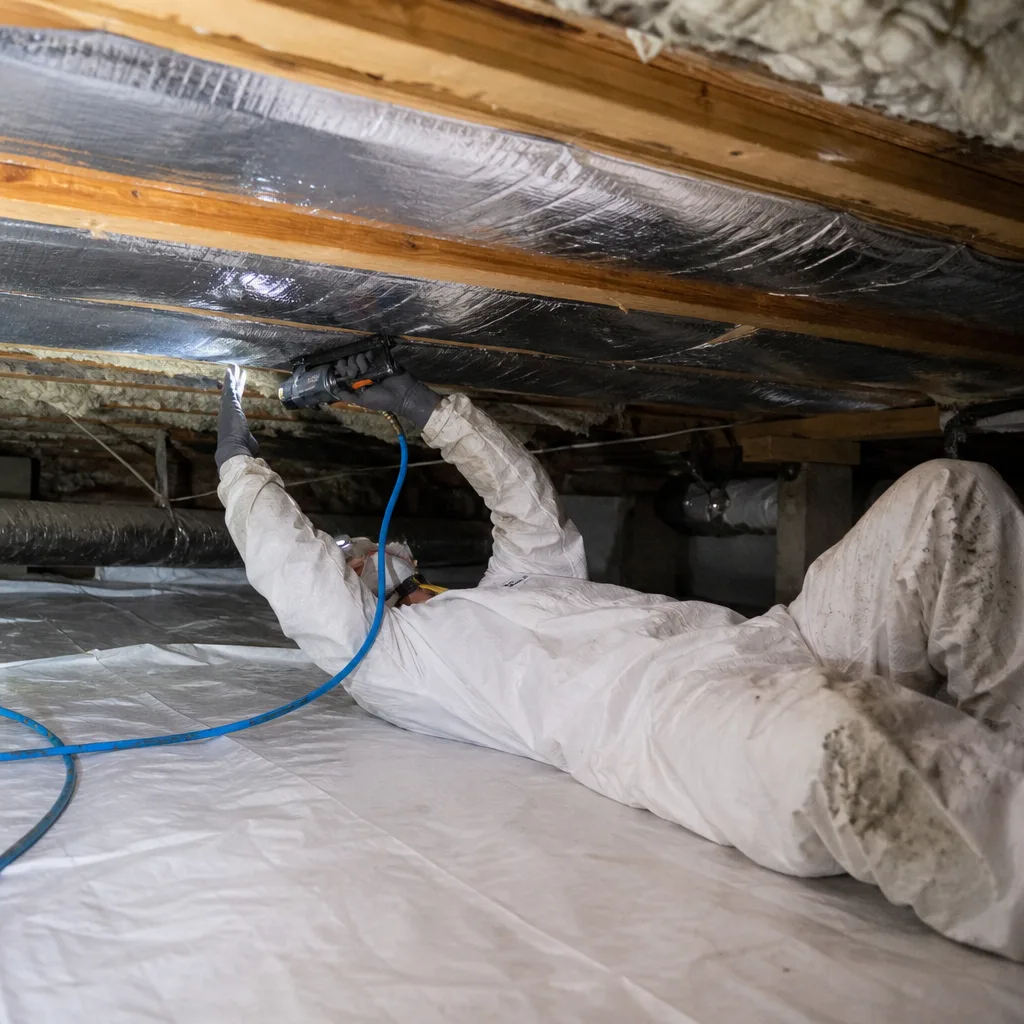
It’s a replacement when: the material is wet or contaminated throughout, there’s widespread mold, or the whole thing has lost its form. For crawl spaces, that conversation often points to crawl space encapsulation and vapor barrier work in Paradise, since ground moisture is usually the source.
One more thing to look for: if the attic feels noticeably hot or drafty down below, or your energy bills climb two summers in a row with no other explanation, that’s a sign the loss has outpaced a simple top-off. A visual check plus a spray foam insulation upgrade in Paradise can seal the leaks that keep coming back.
What Top-Offs and Repairs Realistically Cost in Paradise
Prices move, and manufacturers vary, so we won’t pretend these are fixed. But here’s a realistic range of what homeowners in the Paradise Valley deal with, so you can plan. Most inspections and audits should be free or nearly free; the real cost sits in the correction.
- Free estimate or second opinion: $0. A written second opinion on any estimate you’ve already received should cost you nothing.
- Attic inspection and written report: usually free or a small trip charge outside a service area.
- Blown-in top-off (restoring R-value): varies by attic size and material, with square footage the biggest driver. It’s the affordable fix in the mix.
- Spot repair (removal plus re-blow at a problem area): priced on the size of the affected zone.
- Full removal and replacement: the high end, and the one worth avoiding by catching problems early.
Where Paradise gets pricey is a top-off layered over a moisture problem that was never fixed. Fix the source first, then restore the material. If you’re a senior or a veteran, ask about the permanent discount; the local pro we connect you with honors it, along with a free second opinion and no trip charge inside their county. To get a real number for your attic, see the Paradise attic insulation service page or call for a free estimate.
Common Mistakes to Avoid
- Waiting for a “sign.” There’s usually no sign. Insulation fails quietly, which is exactly why a scheduled annual check exists. Don’t wait for a cold bedroom before you look up there.
- Judging depth by feel. Stick your hand in and it feels “about right” is how people miss a 4-inch drop. Measure it against the joist, every time.
- Ignoring the monsoon. Several big storms back to back can soak attic material that looked fine the year before. Check the attic after any heavy summer weather, not just in the fall.
- Putting fresh material over wet material. This traps moisture and invites mold. If it’s wet, it gets removed first.
- Handling rodent-contaminated insulation yourself. Breathing the disturbed dust is the last thing you want. Let a pro remove it and then seal the entry points.
- Skipping the photos. No dated measurement, no paper trail. Two minutes with your phone each fall is the cheapest protection in this whole guide.
- Assume a “top-off” quote is enough. If the same area keeps dropping in depth, the real problem is an air leak, not a lack of material. That’s a sealing job, not a thicker blanket.
When to Call a Professional
Call us when the check stops being a check. If you find wet or soaked insulation after a monsoon storm, widespread settling that’s dropped your R-value well below target, evidence of rodents or other pests in the material, or gaps you can’t safely seal around lights and ducting, that’s a professional call, not a weekend project. The same goes for any crawl space moisture you suspect is feeding a damp attic. A blown-in top-off or repair done right takes a trained operator and the right equipment, and getting the material type matched to what’s already there matters more than it seems. Walt’s Insulation Paradise offers free estimates in Paradise, and if you’ve got a quote in hand, the local pro will give you a free second opinion. Call (844) 978-0556 to set it up.
Frequently Asked Questions
Once a year, ideally in early fall, plus one check after any heavy monsoon storm in late summer. Annual inspection catches settling, moisture, and pest issues before they get expensive. In Paradise, the fall inspection is the one that matters most because it happens right before the cold season.
Measure from the top of the ceiling joist to the top of the insulation with a ruler or a marked stick in several spots, and compare to your target depth. If it’s noticeably below where it started, it has settled. Cellulose settles faster than fiberglass in Paradise’s heat, so homes with cellulose should measure every single fall.
Repair, top-off, or spot replacement is almost always cheaper than full replacement, which is why catching problems early pays off. Full replacement only makes sense when the material is wet, contaminated, or moldy throughout. For most dry attics, a top-off restores the R-value without the cost of starting over. Call (844) 978-0556 for an exact quote; estimates are free.
Yes, a quick visual check for damp spots, stains, and odors after a big monsoon rain is something any homeowner can do safely from the attic access. What you shouldn’t do is climb around on wet insulation or try to remove contaminated material yourself. If you find moisture, call in a pro.
A routine top-off is usually a morning’s work for a crew, depending on attic size and access. Spot repairs are quicker. The exact time depends on how much material goes in and whether any removal is needed first, which is why an on-site estimate is the only honest number.
Yes, and it’s especially important the first two years, because new material settles most during that window. Put your first annual check on the calendar before the installer’s truck leaves the driveway. New in Paradise doesn’t mean permanent, and a quick yearly look gets you the full life out of the job.
The Bottom Line
Blown-in insulation isn’t install-and-forget, but it’s close. A 15-minute attic check every fall, a quick moisture look after the monsoon, and a decade-hour of measurement photos will keep your attic performing for years without a single service call. Measure the depth, watch for settling (especially if you have cellulose), treat wet material as an urgent call, and keep dated photos so you’ve got proof if you ever need it. In Paradise, the heat and the monsoon do the real damage, and the calendar is your best defense. Remember: the most important check is the one you actually do. Our number is (844) 978-0556 if you’d rather have us look.
Written by the team at Walt’s Insulation Paradise.