
Last updated November 18, 2026
Attic Insulation Troubleshooting: Common Problems and How to Fix Them
If your AC runs almost continuously in June but your HVAC tech keeps saying the system is “working fine,” the problem probably isn’t your AC. It’s what’s sitting above your ceiling. In our experience across the Las Vegas Valley, most attic insulation failures never announce themselves. They hide inside your kWh trend and your HVAC runtime, quietly bleeding money out of your wallet month after month. Homeowners here in Paradise chase the symptom, a high power bill, for years without ever diagnosing the cause. This guide teaches you to work backward from the symptom to the actual problem, so you can stop guessing and start fixing.
Quick Answer
Most attic insulation problems show up first as a rising kWh trend (not just a high dollar amount), an HVAC system that never shuts off, or rooms that won’t hold temperature. The fix depends on the failure mode: blown-in fiberglass that has settled or channeled needs topping off or re-blowing, wet insulation from a swamp cooler leak needs removal and replacement after the leak is sealed, and any insulation installed without a proper air barrier above it needs air sealing before more material is added.
Table of Contents
- Start With the Symptom: Your Utility Bill Is a Diagnostic Tool
- The Three Ways Blown-In Fiberglass Fails in Desert Climates
- Why Batts Without an Air Barrier Perform Like They Barely Exist
- Animal Intrusion Damage That Doesn’t Show on a Visual Inspection
- Insulation Problem or Air-Sealing Problem? (And Why Fixing One Wastes Money)
- Moisture, Swamp Coolers, and Wet Insulation in Paradise
- A Step-by-Step Diagnosis Checklist
- Repair or Replace? How to Decide
Start With the Symptom: Your Utility Bill Is a Diagnostic Tool
The dollar amount on your power bill tells you almost nothing useful. In Paradise, NV, where summer afternoons regularly push past 110°F, everyone’s bill is high in July. What matters is the kWh figure, the trend line, and how it compares year over year and month over month.
Pull twelve months of bills. You’re looking for three patterns:
- A climbing kWh trend with no change in habits. If your usage is up 15% or more over the same month last year and nobody moved in, changed the thermostat setpoint, or bought a pool pump, suspect insulation degradation or an air-sealing failure.
- A summer-to-winter ratio that keeps widening. A healthy, sealed attic should narrow the gap between your hottest month and your mildest. When summer usage climbs while winter stays flat, the cooling load is escaping through the ceiling.
- Usage spikes after a specific event. A new swamp cooler install, a roof replacement, a plumbing leak upstairs, or a rat problem can each be pinpointed on the bill if you know the date. A spike that starts the month after a roof job is a strong clue that insulation was disturbed or left thin.
We’ve walked countless attics in Paradise and neighboring Henderson where the owner had replaced a perfectly good AC unit twice before anyone looked at the insulation. The HVAC system was fighting an attic that measured effectively R-11 after settling. If your tech keeps telling you the system is fine and the bill says otherwise, the ceiling is where we look first.
The Three Ways Blown-In Fiberglass Fails in Desert Climates
Blown-in fiberglass, including the GreenFiber and Knauf blends we install and service across Paradise, is the workhorse of Southern Nevada attics. It’s cost-effective, fills irregular cavities well, and installs fast. But it fails in three specific ways that a quick glance won’t reveal.
1. Settling. Fiberglass settles under its own weight and gets compacted by thermal cycling over years. A home originally insulated to R-30 can drop to an effective R-19 or R-22 as the material flattens. When you look at depth, you can’t always tell; what reads as six inches may be dense material, and what reads as ten may be fluffy and useless.
2. Air channeling. Wind washing and interior convection currents carve channels through loose fiberglass. You can see them as troughs or bald patches where the material has been pushed aside by air movement from gaps around recessed lights, top plates, and chases. Channeling looks minor but creates thermal bridges that bypass the insulation entirely.
3. Moisture intrusion from swamp coolers. This is a Paradise-specific failure mode. A swamp cooler sits on the roof, moves a lot of humid air, and if the ductwork or the unit’s base develops the smallest leak, that moisture finds the insulation directly below. Wet fiberglass loses its R-value and never fully recovers. Even after it dries, it’s compacted and matted, and mold can take hold. We’ve pulled saturated fiberglass out of Paradise attics that was still wet months after a cooler was decommissioned.
Why Batts Without an Air Barrier Perform Like They Barely Exist
Fiberglass batts get a bad reputation that they don’t entirely deserve. Installed correctly and paired with air sealing above the ceiling plane, they perform. Installed between joists with open air movement above and below, they perform like they’re barely there, even at full thickness.
The physics is simple: insulation slows conductive heat transfer, but it doesn’t stop convective air movement. A gap at the joist ends, an unsealed top plate, or an unfaced batt that allows air to circulate over the top defeats the whole assembly. That’s why a home in Paradise with nominal R-30 batts can feel worse than a home with R-19 blown-in that was sealed correctly. If your attic has batts that weren’t accompanied by a proper air-sealing pass, the R-value printed on the bag is a fantasy number.
Animal Intrusion Damage That Doesn’t Show on a Visual Inspection
Rodent and bird intrusion is a common and quietly destructive problem in Paradise attics. What looks intact from the access hatch isn’t. Rats and mice tunnel through loose insulation, pack it down into nests, and leave droppings and urine that break down the material over time. The biggest problem isn’t the visible damage; it’s the invisible air channels their runs create and the contamination that makes the insulation a health concern rather than a thermal barrier.
- Tunnels and runs: Look for distinct paths through the material. These become leaks that defeat the surrounding insulation.
- Compacted nesting areas: Material flattened and matted in corners, near gable vents, or around plumbing penetrations.
- Contaminated material: Droppings, urine staining, and chewed vapor barriers signal that removal and replacement is the only real fix.
- Entry points: Vents, soffit gaps, and roof penetrations that were never air-sealed or screened.
If you have an active problem, the order matters: exclusion first, then removal and cleaning, then re-insulation. In Paradise attics we see this most often around older single-story homes near the wash corridors where wildlife has easy access. The full attic insulation service in Paradise includes a look at the whole envelope, not just the material depth.
Insulation Problem or Air-Sealing Problem? (And Why Fixing One Wastes Money)
This is the distinction that trips up most homeowners, and it’s the one that determines whether your money does anything useful.
Insulation resists heat flow. Air sealing stops the movement of air. Air sealing is the can foam, the gaskets around recessed lights, the sealed top plates, the sealed chases. If your problem is a thermal one, more insulation helps. If your problem is a convective one, more insulation without sealing just gives the moving air a thicker layer to bypass.
The practical consequence: adding blown-in insulation to an attic with unsealed can lights and open chases wastes money. You have literally paid for material that air moves through without ever slowing down. Every job we do in Paradise starts with a diagnostic pass to identify which problem we’re actually solving. We’d rather tell you that you only need air sealing and a top-off than sell you a full re-insulation you don’t need. The Walt’s Insulation Paradise home page describes how we scope these jobs.
Moisture, Swamp Coolers, and Wet Insulation in Paradise
Southern Nevada is dry, which makes the moisture question counterintuitive. But moisture is the single most damaging insulation problem in Paradise, because it doesn’t come from humidity in the air – it comes from a specific piece of equipment: the swamp cooler.
When a swamp cooler is running, the line pressure and pad saturation push moisture through the unit’s base and duct connections. Over a season or two, small leaks saturate the fiberglass directly below. Once fiberglass gets wet, it compacts, loses its R-value, and becomes a substrate for mold. Some homeowners keep the cooler running for years while the insulation below quietly rots.
The troubleshooting approach:
- Check the cooler pan, base seal, and the duct runs for any moisture staining on the attic decking or joists.
- Look for sagging or matted insulation directly beneath the cooler.
- Smell the attic. A musty, dank odor above the ceiling is a signal that the material is wet, not just old.
- If moisture is confirmed, the leak gets fixed first, the wet material gets removed, the cavity gets dried and treated, and new insulation goes in. Doing it in any other order just re-wets good material.
Homes that have transitioned from swamp coolers to refrigerated AC are the most common cases we run into in Paradise. The cooler was decommissioned years ago, but the moisture damage it did is still sitting up there, invisible and slowly degrading the thermal envelope.
A Step-by-Step Diagnosis Checklist
If you’re going to look at your own attic, here’s the order to inspect in. It’s the same sequence we use on a service call.
- Compare kWh year-over-year. Open last year’s bill and this year’s matching month. A 15% or greater jump with no habit change is your flag.
- Measure depth, then test density. Use a ruler at several points. If it reads lower than it should, settling is likely. If depth looks fine but the material is compacted, the effective R-value is lower than the depth suggests.
- Look for air channels and wind washing. Scan for troughs and bald patches around penetrations.
- Check for moisture. Staining, musty odors, matted material beneath the swamp cooler or any roof penetration.
- Check for animal evidence. Droppings, tunneling, nests, and chewed vapor barriers.
- Check air-sealing gaps. Can lights, top plates, chases, and plumbing penetrations.
- Look at the ventilation. Blocked soffits, inadequate ridge vent coverage, or disconnected bath fans dumping warm moist air into the attic.
Safety note: attics in Paradise hit 140°F or higher in summer afternoons, and loose fiberglass is an irritant. If you’re going up, do it in the early morning, wear a respirator, gloves, long sleeves, and eye protection, and don’t crawl across joists you can’t see. We’ve seen too many homeowners put a foot through a ceiling. If the inspection involves anything tight or dangerous, get a professional in.
Repair or Replace? How to Decide
The decision usually comes down to two questions: how much of the material is still viable, and what caused the problem in the first place?
- Repair (top off or spot-fix) is the right call when the failure is settling only, the material is clean and dry, and the cause is fully understood. If you’re at R-19 and want to be at R-49, that’s a top-off, not a replacement. We use Owens Corning or GreenFiber for these jobs depending on the target R-value and the cavity depth.
- Replace is the right call when the material is wet, contaminated with animal waste, or has failed structurally across the whole field. This is common after a swamp cooler leak or a long-term rodent problem. Removal and replacement is also the correct move when the original install was so poorly air-sealed that the assemblies need to be redone properly.
- Full re-scope after a leak. Any moisture problem requires the leak fixed, the affected material removed, and the cavity dried before re-insulation. Skipping any step just delays the same failure.
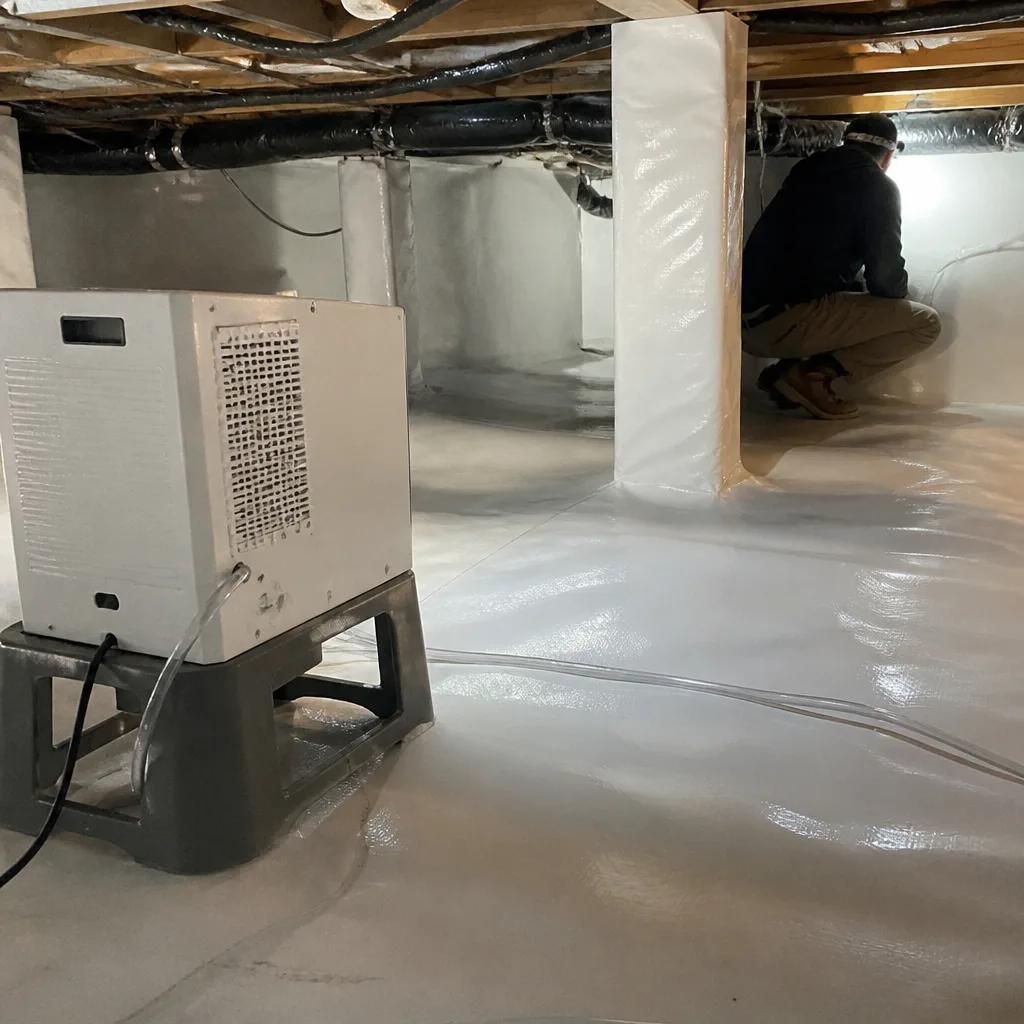
If you have a crawl space underneath the house, moisture and air sealing there matter just as much. That’s why we often pair attic work with a proper crawl space encapsulation and vapor barrier solution in Paradise, so the whole envelope gets handled together.
Common Mistakes to Avoid
- Adding insulation over an air-sealing problem. This is the most expensive mistake we see in Paradise. You pay for material that does nothing because air moves right through it.
- Judging insulation by depth alone. Depth is only useful when you know the density and whether the material has compacted. Settling means the same number of inches represents less performance than it did when new.
- Leaving swamp cooler moisture unrepaired before a top-off. Topping off over a wet cavity re-saturates the new material. The moisture has to be fixed first, every time.
- Skipping rodent exclusion before re-insulation. If you don’t seal the entry points, the animals come back and undo the job in a year. Exclusion and cleaning come before the new material.
- Choosing a bag by its R-value claim without reading the install depth. The bag talks about theoretical performance. In a Paradise attic, real performance depends on installation quality and air sealing.
- Assuming a high-efficiency AC will fix the problem. A perfectly good AC unit in Paradise will run all day if the ceiling above it is effectively R-11. Fix the envelope and the AC starts working the way it was designed to.
- Hiring a call center instead of a local crew. When something needs a callback, a real address and a licensed company that answers the phone matter. The lifetime spray foam insulation in Paradise option we offer for certain cavities is a good example: if the builder of the assembly doesn’t stand behind it, the material doesn’t mean much.
When to Call a Professional
Some of this you can diagnose yourself. A few scenarios need a professional, and the cost of guessing is higher than the cost of a visit. Call when: you have confirmed moisture from a swamp cooler or any roof penetration; you suspect animal contamination because removal and disposal require proper equipment; the insulation sits at access points where a ladder or a crawl puts you in an unsafe spot; you’ve had a roof replacement and suspect the material was never brought back to proper depth; or you have added a room, a can-light grid, or a bath fan and the assembly has never been resealed.
Walt’s Insulation Paradise offers free estimates in Paradise – call (844) 978-0556. We answer live, 24/7, and there’s no trip charge inside the service county.
Frequently Asked Questions
The clearest signal is a climbing kWh trend on your utility bill compared to the same month a year ago, with no change in your habits, thermostat setpoint, or household size. If your usage is up 15% or more, or your HVAC runs continuously without shutting off, the insulation is the first place we check. Call (844) 978-0556 for a free estimate to confirm the diagnosis.
Yes. Settling, wind channeling, and thin coverage can often be fixed by air sealing and then topping off with new material. Full removal is only necessary when the existing insulation is wet, contaminated with animal waste, or structurally compromised across the whole field. In Paradise, the most common full-removal cases involve swamp cooler moisture damage.
Because the AC isn’t the problem. In our experience, a system that runs all day while keeping the house barely cool is almost always fighting a ceiling that’s losing R-value through settling, air channels, or an unsealed attic plane. The AC is doing its job; the envelope around it isn’t. A free estimate in Paradise will show you exactly which of those is happening.
For Southern Nevada’s climate, most homes should be insulated to R-49 in the attic for best performance. Older homes often sit at R-19 to R-30 in effective terms after years of settling. Topping off to R-49 is usually a much better return than replacing an AC unit. We install Owens Corning and Knauf products for these jobs, and call (844) 978-0556 to get an exact recommendation for your home.
It works only when the air-sealing pass is done first and the existing material is dry, clean, and structurally sound. If the old material is wet or contaminated, adding new insulation on top just buries the problem. In Paradise we inspect the existing material before recommending any top-off.
Removal and replacement typically runs higher than a simple top-off because it includes extraction, disposal, air sealing, and new material. A straightforward top-off is significantly less. We quote both options in writing so you can compare, and your quote comes with a free second opinion if you want to check it. Call (844) 978-0556 for your estimate.
The Bottom Line
Attic insulation problems rarely show up as obvious damage. They show up as a utility bill that keeps climbing, an AC that won’t stop running, or a room that never quite feels right. Start with the kWh trend, measure depth and check density, look for moisture from the swamp cooler, and confirm whether the assembly has proper air sealing. Get the diagnosis right before you buy any material, because fixing an air-sealing problem with insulation is the most expensive mistake we see in Paradise. When the problem is wet material, animal contamination, or a whole-assembly failure, a professional inspection with a written estimate is worth the call. Call (844) 978-0556 for a free estimate in Paradise, and we’ll help you figure out what’s actually happening above your ceiling.
Written by the team at Walt’s Insulation Paradise.