
Last updated November 18, 2026
DIY vs Professional Attic Insulation: What’s Safe to Do Yourself
A Paradise attic in July can hit 150°F within 20 minutes of sunrise. That’s not a comfort warning. It’s a heat stroke warning, and it’s the first reason the “just rent a blower from the home center” advice floating around YouTube deserves a harder look in this valley. Those tutorials were filmed in mild climates, in attics with clean gable ends and gentle pitches, by people who could stand upright at noon. A Paradise attic in August is a different animal entirely. This guide breaks the job down task by task, because the honest answer isn’t a blanket yes or no. Some of it is genuinely DIY-safe. Some of it will hurt you or lock moisture into your house for good.
Quick Answer
Adding batt insulation in a cool month, installing an attic hatch cover, and air-sealing accessible penetrations are genuinely DIY-safe for a careful homeowner. Blown-in insulation, spray foam, vapor barrier work, and any job that puts you in a Paradise attic between May and September are not worth the risk. The machine calibration problem alone means most DIY blown-in jobs under-perform to a measurable degree, and the moisture mistakes from bad air sealing are permanent.
Table of Contents
- What’s genuinely DIY-safe in a Paradise attic
- The tasks that carry real risk (and why)
- Why rental blower machines don’t perform like professional equipment
- Licensing and permit reality in Clark County
- Heat safety math for Paradise: when it’s physically feasible
- The hidden cost: how bad air sealing locks moisture in
- Common mistakes to avoid
- When to call a professional
What’s genuinely DIY-safe in a Paradise attic
We’ve been in hundreds of Paradise attics and we say this without hesitation: a few tasks belong in the homeowner’s hands, especially if you’re budget-conscious and patient. The key is choosing tasks that don’t involve heat stress, chemical hazards, or airtight envelope work.
These are the jobs most homeowners can handle safely:
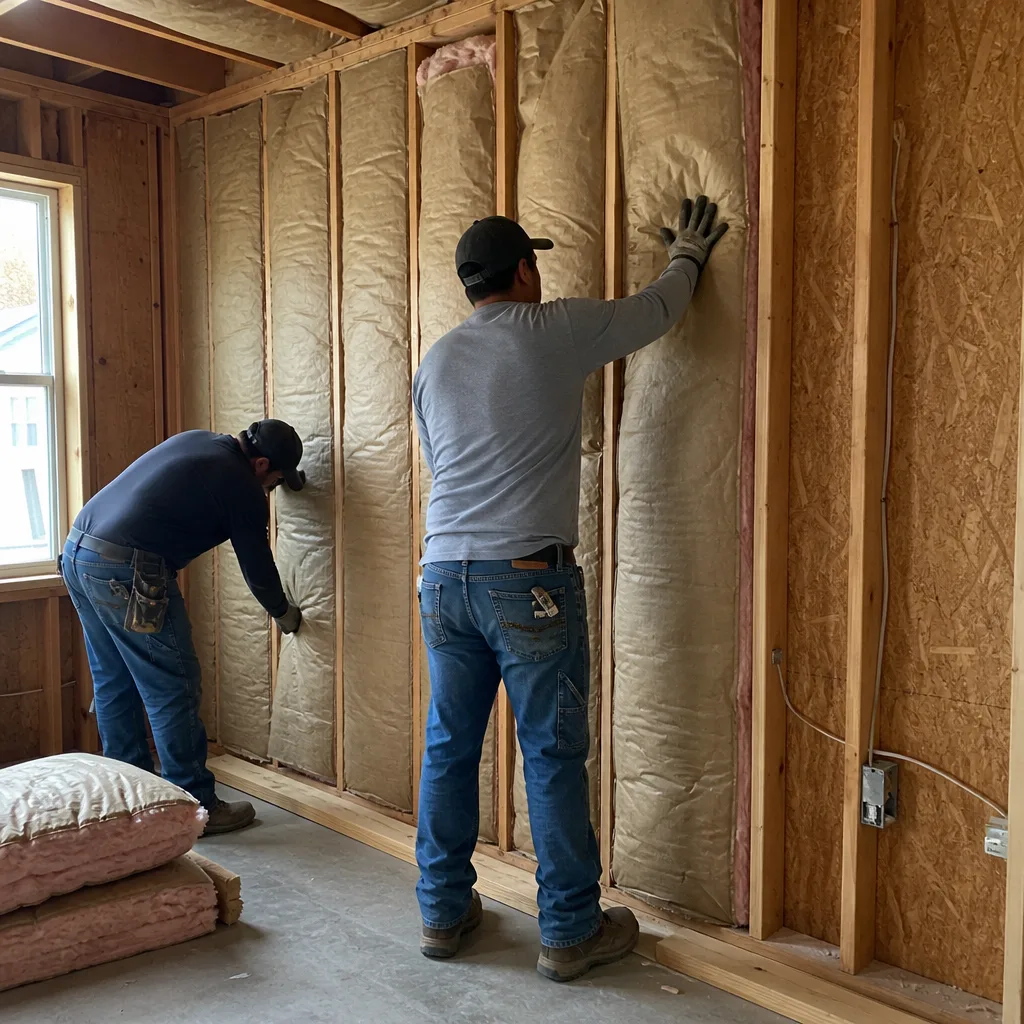
- Adding unfaced batt insulation over existing batts in cool months. If you already have good ceiling joist bay access and the cavity is dry, adding another layer of batts (R-30 over R-19, for example) is straightforward work. Use a batts brand you trust – Owens Corning or Johns Manville batts cut predictably with a sharp utility knife.
- Installing an attic hatch cover or insulated tent. This is one of the highest-value, lowest-risk improvements you can make. It’s a pre-built product, installs with a staple gun and a few minutes of patience, and stops a surprising amount of heat loss.
- Air-sealing accessible penetrations from below. You can seal outlet gaskets and top-plate gaps from inside the home using foam gaskets and caulk, without ever climbing into the attic. That’s meaningful work done from a ladder in conditioned space.
- Adding a simple weatherstripped attic door seal. Basic weatherstripping and a foam gasket at the hatch frame are easy and safe.
Notice what’s not on that list. No blown-in. No spray foam. No vapor barrier work. No jobs that require you to stand on joists over a hot ceiling cavity this time of year. If you want a deeper look at what professional attic insulation in Paradise actually includes, that’s covered in detail on the main service page.
The tasks that carry real risk (and why)
Here’s where the honest conversation starts. The tasks that most homeowners underestimate are exactly the ones that matter most to attic performance.
- Blown-in insulation. Sounds easy. In practice, this requires precise machine calibration, coverage planning, and eye/airway protection while standing in a hot, dusty environment for hours. And the delivered density is the entire game – covered below.
- Spray foam (two-part kits or pro-applied). Isocyanates are a genuine respiratory hazard. The kits sold retail have strict temperature and substrate requirements that many Paradise attics don’t meet in summer. Properly done, our spray foam insulation in Paradise work is done with professional equipment and PPE that retail kits don’t match.
- Vapor barrier and crawl space work. That’s a whole other envelope problem. Vapor barrier systems need to work with the home’s moisture profile; a DIY job with the wrong product traps rather than releases moisture. See crawl space encapsulation and vapor barrier in Paradise for the specifics.
- Removing old insulation or handling contaminated material. If your attic has rodent activity, old cellulose with moisture damage, or anything that could be asbestos-era vermiculite from a pre-1980 home, do not disturb it yourself. Removal is a pro job.
- Anything that requires you to stand on joists in June, July, or August. Covered in depth in the heat math section below.
The theme: if a task puts you in direct contact with chemicals, dangerous heat, or a contaminated attic, it’s not a DIY chore. It’s a professional job that happens to be tempting on YouTube.
Why rental blower machines don’t perform like professional equipment
This is the part almost no DIY guide explains, and it’s the reason so many do-it-yourself blown-in jobs in Paradise quietly under-perform their measured depth.
Blown-in insulation performance isn’t just about R-value per inch. It’s about installed density – how tightly the fibers settle against each other. Rental blowers from big-box stores are typically calibrated for low-density fills because low-density fills are easier to move through a small hose and less likely to clog. That’s fine for a quick cosmetic top-off. It’s not what you want for a real thermal barrier.
Professional machines (with the settings the technician dials in based on fiber type and application) push the material at the correct density for the R-value on the bag label. With GreenFiber cellulose or a fiberglass blow, that difference matters. When density is off, you can hit the “17 inches for R-49” mark on your tape measure and still measure short on real R-value – because the fibers are loose, air moves through them, and the ceiling stays warm.
What homeowners see after a DIY blown-in job in our area, over and over:
- Depth matches the bag chart, but the home still feels drafty.
- Settling accelerates because low-density fiber compresses faster over the first heating season.
- Coverage is uneven near the eaves and around penetrations because the hose is short and awkward to reposition.
None of this is homeowner error. It’s an equipment limitation. Fixing it after the fact is more expensive than having it done right the first time.
Licensing and permit reality in Clark County
We get asked this constantly, so here’s the plain answer: homeowners in Nevada are allowed to perform certain repairs and improvements on their own primary residence without a contractor’s license, including some insulation work. That said, Clark County permits and inspections are triggered for certain scopes, and the rules don’t treat every attic task the same way.
Rough mapping of what we see in practice:
- Adding batt insulation over existing batts in your own home. Generally a homeowner-permitted activity. No contractor license required.
- Air sealing accessible penetrations, attic hatch covers, weatherstripping. Generally homeowner-legal and low-risk.
- Blown-in insulation on a residence your household occupies. Technically allowed for the homeowner, but with performance risks noted above and inspection triggers if it’s bundled with a permitted renovation.
- Spray foam insulation. We recommend licensed professional work because of the PPE and chemical-handling requirements, and because some jurisdictions trigger inspection.
- Any insulation work on a rental, second home, or property you don’t occupy. Licensed contractor required.
- Insulation as part of a permitted remodel. The permit scope typically runs to the licensed contractor.
We tell people to call Clark County Building directly for anything they’re unsure about. We’d rather you get the answer from the source than have a permit issue surface when you sell the house. The rules are explicit about who can pull a permit for what, and getting it wrong can complicate a future transaction.
Heat safety math for Paradise: when it’s physically feasible
This is the section we wish every homeowner read before buying a $90 blower rental in July.
Paradise summer attics routinely reach 140-160°F by mid-morning. That’s not a “you’ll sweat” situation. Above about 104°F ambient, your body can’t cool itself by sweating effectively. At 140°F, you have minutes, not hours. Add the fact that attics in Paradise are often low-pitch with limited headroom and no airflow, and it becomes a genuinely dangerous environment for anyone without heat acclimation and a spotter.
The realistic working window in our climate:
- December through February: Full-day access is reasonable. Attics stay under 100°F for most of the day. This is when DIY work makes the most sense.
- March and November: Workable in the morning, wrap up by 10 am. Anything after 11 am carries rising risk.
- April and October: Early morning only. In and out by 8 am. Bring twice as much water as you think you need.
- May through September: Do not go in. Even at 6 am, Paradise attics can already be over 110°F depending on the previous day’s heat and the roof orientation. Evening access isn’t better – attics hold heat for hours after sunset. Anyone telling you to “just go in early” has never been in a Paradise attic in August.
Heat safety isn’t about toughness. It’s physics. We’ve seen experienced technicians pull out of an attic after ten minutes in July because their core temperature was already climbing. No homeowner on a Saturday is going to be safer than they were.
The hidden cost: how bad air sealing locks moisture in
The mistake that costs Paradise homeowners the most money isn’t the insulation itself. It’s the sequence: insulating before air sealing properly.
Here’s the mechanism. A home’s attic leaks warm, moist air from conditioned space up through top plates, recessed lights, and plumbing penetrations. If you add insulation over those leaks without sealing them first, you’re not fixing the problem. You’re slowing the airflow enough that the moisture condenses in the insulation itself, or against the roof deck, instead of escaping. That trapped moisture then:
- Reduces the R-value of most batt and blown insulation over time.
- Feeds mold on the underside of the roof deck and on framing.
- Rotts ceiling drywall over years, not months, so you don’t notice until it’s expensive.
- Can trap rodent and pest odors permanently into the fiber matrix.
We’ve been called into Paradise homes where the insulation was installed correctly but the sealing wasn’t, and the whole job has to come out. That’s the real hidden cost. Not the $300 in materials – the removal, the deck repair, the reinstall, and the time. Air sealing first is not optional; it’s the whole job. If you’re not confident you can identify and seal every meaningful penetration, that’s the point where a professional look matters more than any other step in the process.
Common Mistakes to Avoid
- Insulating before air sealing. Covered above, but it’s the mistake that ruins everything else. Seal penetrations and top plates first, then insulate.
- Trusting the tape measure instead of the density. Depth is not R-value. If the fill is loose, you can measure correctly and still get thermal performance well below the label.
- Blocking soffit vents with insulation. In Paradise it’s easy to push batts right against the roof deck edge and choke the passive ventilation. That traps summer heat and pushes attic temps even higher. Use baffles, always.
- Working in a summer attic “just for an hour.” We’ve been saying it in different ways throughout this guide: summer attic work in Paradise is a heat injury waiting to happen, even for short windows. The math doesn’t care about your fitness level.
- Skipping the hatch cover. A surprising number of Paradise homes have an uninsulated attic hatch – the single most concentrated heat leak in the ceiling. It’s a $40 fix and a five-minute install. Don’t skip it.
- Layering faced batts on top of faced batts. The second vapor barrier traps moisture between the two layers. Batts added over existing need to be unfaced, period.
- Ignoring old insulation that looks “off.” Discolored, damp-smelling, or grainy attic insulation in a pre-1980 Paradise home could be contaminated or have health hazards. Get a professional read before you touch it.
When to Call a Professional
Call a professional when the task involves blown-in insulation, spray foam, vapor barriers, insulation removal, or anything that puts you in the attic between May and September in Paradise. Call when the existing insulation has moisture damage, pest activity, or unknown age. Call when you’re bundling insulation with a renovation that triggers a permit. And call when you’ve done the safe pieces (batt top-off, hatch cover, weatherstripping) and want an honest look at whether the rest of the envelope is actually performing. Walt’s Insulation Paradise offers free estimates in Paradise – call (844) 978-0556. We also offer a free second opinion on any written estimate, no trip charge inside our service county, and a permanent 10% discount for seniors and veterans.
Frequently Asked Questions
DIY is cheaper for batt top-offs and hatch covers – typically $200-$500 in materials for a typical Paradise single-family attic, versus $1,200-$3,500 for a professional blown-in job depending on R-value target and existing conditions. But DIY stops being cheaper the moment a job has to be redone because of low density or missing air sealing. Call (844) 978-0556 for an exact quote – estimates are free.
For a home you own and occupy, Nevada allows homeowners to perform certain improvements including some insulation work without a contractor’s license. The catch is what’s allowed versus what triggers a Clark County permit or inspection, and where the line is when insulation is tied to a renovation. Call Clark County Building for anything borderline. For anything commercial, rental, or second-home, a licensed contractor is required.
Because most online instructions came from a different climate and a different set of building codes. Paradise homes in Clark County typically want an R-value target tuned to our summer cooling loads, not a blanket “add R-30” rule from a northern blog. The right target depends on your current R-value, your air sealing condition, and the ceiling cavity. Call (844) 978-0556 for a free walkthrough – we’ll measure and give you a real number instead of a rule of thumb.
You can rent the machine, but the machine is the smallest part of the job. Rental blowers are calibrated for lower density fills than professional equipment, which means most DIY blown-in jobs under-perform their measured depth. The home feels warm, and the settling happens faster. That’s before the air sealing, the soffit baffles, and the coverage uniformity questions. Free estimate available at (844) 978-0556.
No. Attics in Paradise routinely reach 140°F+ from May through September, often by early morning. Even fit, acclimated professionals limit exposure and use spotters. There is no safe window in June, July, or August regardless of skill level or time of day. Wait until November or have it done by a pro. Call (844) 978-0556 to schedule a fall estimate.
The moisture that leaks up from conditioned space condenses in the new insulation or against the roof deck instead of escaping. Over time it reduces R-value, feeds mold, and can rot drywall. The fix is expensive – removal and reinstall. Air sealing first is not negotiable if you want the insulation to perform. If you’re unsure how to identify all the penetrations, that’s worth a professional look.
The Bottom Line
Some of this is DIY-safe. Batt top-offs in December, an attic hatch cover, weatherstripping, and air sealing accessible penetrations from inside the home are all reasonable for a careful homeowner. Everything else – blown-in, spray foam, vapor barriers, removal, and any attic work from May through September in Paradise – belongs with a professional. The heat math is unforgiving, the equipment calibration gap is real, and moisture mistakes from bad air sealing are permanent. If you’re weighing the tradeoff for your home, the cost of an inspection is a lot less than the cost of a redo. Our technicians have up to 26 years of experience and we install products from Owens Corning, Johns Manville, GreenFiber, and Demilec. Every job comes with the Done Right Promise – if it’s not done right, we make it right.
Get a Free Estimate in Paradise
We’re the one down the road. Walt’s Insulation is locally owned and owner-operated, with a published address and license number, and a live person answers every call at (844) 978-0556 – no voicemail, no answering service, 24/7. Every estimate is upfront and no-hassle, with a free second opinion available on any written estimate you’ve already received. You’ll also find $40 off any repair over $200, no trip charge inside our service county, and a permanent 10% discount for seniors and veterans. Call (844) 978-0556 for a free estimate and we’ll tell you exactly which parts of your attic you can safely handle yourself.
Written by the team at Walt’s Insulation Paradise.