
Last updated November 18, 2026
Seasonal Insulation Care for Paradise: Year-Round Homeowner’s Guide
Most Paradise residents know the drill for summer: shade the windows, run the AC early, brace for the 110°F afternoons. Almost none of them think about what a 28°F January night does to insulation that was never sealed correctly. That oversight shows up on the NV Energy bill in February, when the heat pump works overtime pushing warm air through gaps you can’t see. In our experience, the winter stress cycle is the one Paradise homeowners underestimate most, and it’s also the one that’s cheapest to fix. This guide walks through both cycles, month by month, so you know exactly what to check and when to call for help.
Quick Answer
Insulation care in Paradise is a two-season job, not a one-time install. Run attic and air-sealing checks in March before temperatures climb past 100°F, inspect crawl space coverage and pipe insulation in November before the first freezing nights, and use your NV Energy usage history to spot degradation before it costs you a full season of higher bills.
Table of Contents
- Why Paradise Has Two Insulation Stress Cycles, Not One
- The Paradise Month-by-Month Insulation Calendar
- What “Pre-Summer Prep” Actually Means for Your Attic
- The Freezing-Night Problem Nobody Talks About
- The October-November Window (and Why It Books Up Fast)
- Using Your NV Energy History to Catch Degradation Early
- Crawl Space Coverage: The Seasonal Check Most Homeowners Skip
- Common Mistakes to Avoid
- When to Call a Professional
- Frequently Asked Questions
Why Paradise Has Two Insulation Stress Cycles, Not One
Insulation in Paradise doesn’t fail from one big event. It degrades from two different seasons pulling on it in opposite directions. In summer, attic temperatures in Paradise regularly push past 140°F, and that heat drives the thermal envelope from above. In winter, overnight lows around 28°F drive the same envelope from outside, and any moisture that collected during the cooler months finds the weak spots.
Here’s what that means in practice:
- Summer stress attacks the attic side. Blown-in fiberglass settles, radiant barriers lose reflectivity if dust coats them, and air sealing tape can soften. The result is heat gain you don’t notice until July, when your AC can’t keep up.
- Winter stress attacks the crawl space and pipe runs. Freezing nights expose gaps in vapor barriers and insulation batts that weren’t tucked tight against the subfloor. A single 28°F night can pop a poorly insulated pipe.
- The overlap is the swing seasons (March-April and October-November), when temperatures are mild enough to do real work without suffering through it. Those are your action windows.
Walt’s Insulation has been working in Paradise since 2000, and the pattern we see most is homeowners who do the spring check and skip the fall one. That’s backwards from how the desert climate actually stresses a house.
The Paradise Month-by-Month Insulation Calendar
Here’s the calendar we give Paradise homeowners. It’s not a generic four-season template; it’s built around when Paradise actually hits specific temperature thresholds.
- January: Watch for cold snaps below 30°F. If your pipes are on exterior walls, run a trickle on the coldest nights and note any cold spots near the floor. Those are your first clues.
- February: Pull your NV Energy usage history from the last 12 months. Compare February this year to February last year, adjusting for weather. A jump of 10% or more is a signal.
- March: Do the pre-summer attic check (details below). This is your last comfortable window before the attic becomes unsafe to enter without heat precautions.
- April: Schedule any air sealing or insulation work. Contractors can still get to you before the summer rush.
- May: Verify your AC isn’t fighting an insulation problem. If rooms cool unevenly, it’s often a duct or attic issue, not the unit.
- June-August: Monitor. Don’t plan major attic work in these months. Attic temperatures in Paradise routinely exceed 140°F, which is a real safety concern.
- September: A quick visual check from the attic hatch: any new sagging, moisture stains, or pest activity?
- October: Do the fall crawl space and pipe inspection. This is the ideal month to schedule encapsulation or vapor barrier work.
- November: Final pre-freeze check. Confirm pipe insulation is intact and crawl space coverage is complete before the first 28°F night.
- December: Review your November and December NV Energy bills against last year. If the pattern is holding, you’re in good shape.
What “Pre-Summer Prep” Actually Means for Your Attic
Most “pre-summer insulation tips” you’ll find online are generic: check for leaks, add insulation, seal gaps. In Paradise, the specifics matter more. Here’s what our technicians actually look for in March, before temperatures climb past 100°F.
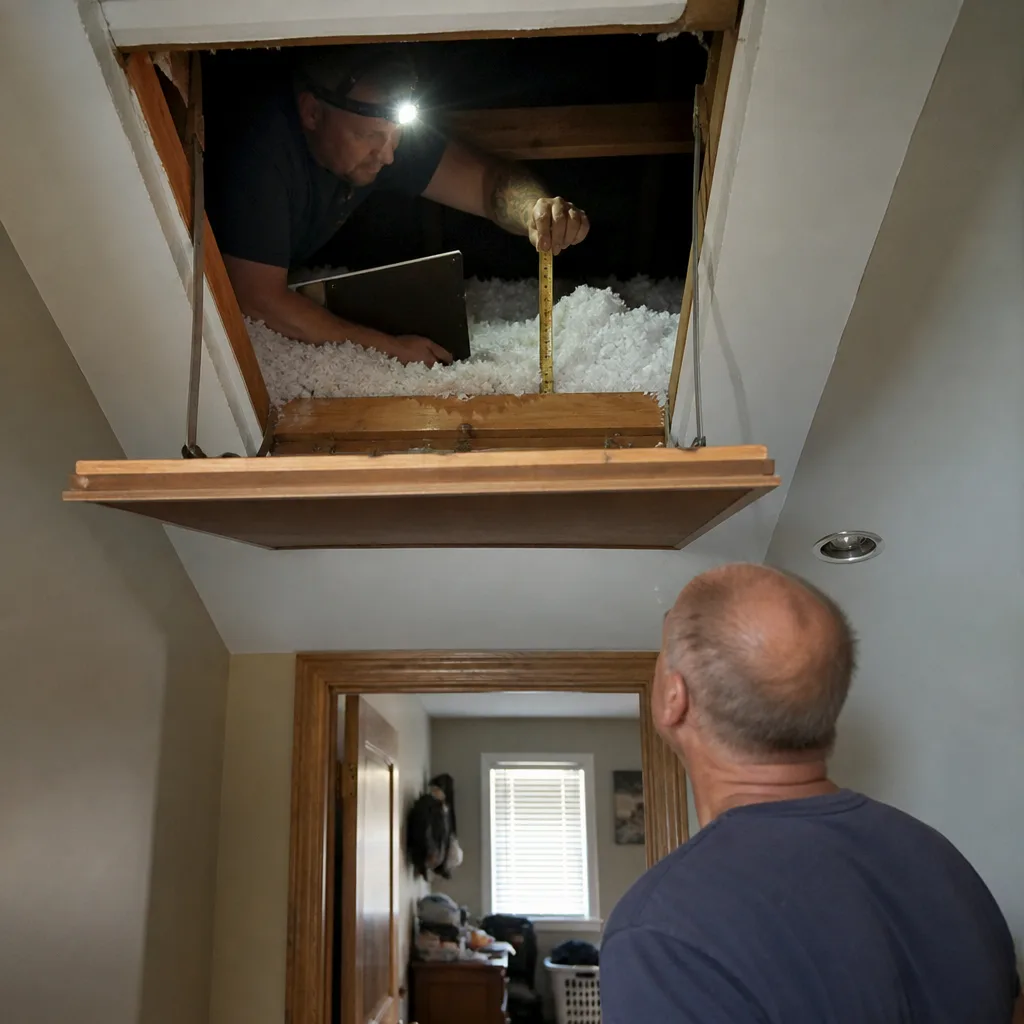
- Blown-in depth: Measure the actual settled depth of your blown-in insulation. In Paradise attics, fiberglass settles faster than homeowners expect because of the heat cycling. If you’re under 10 inches, you’re likely under-insulated for this climate.
- Air sealing at the top plate: Check where the attic meets the wall. Gaps here let 140°F attic air into your conditioned space all summer.
- Radiant barrier condition: If you have a radiant barrier (common in newer Paradise builds), check for dust buildup and tears. A dusty barrier is roughly half as effective.
- Duct sealing: In Paradise, ducts that run through the attic lose measurable cooling before the air ever reaches your rooms. Look for disconnected joints or torn flex duct.
- Pest evidence: Rodents love warm attics. Look for droppings, chewed insulation, and entry points. This is often the root cause of insulation degradation.
If you’re doing the check yourself, do it on a cool morning in March, not on a hot afternoon. If anything looks off, Attic Insulation in Paradise is the right next step: a real inspection will tell you whether you need repair, replacement, or just a top-up.
The Freezing-Night Problem Nobody Talks About
Here’s the part that surprises Paradise homeowners: your insulation was probably installed with summer in mind. Winter performance is a different question, and the failure mode is different.
When Paradise dips to 28°F, three things happen at once:
- Pipe insulation loses effectiveness if it’s thin, damaged, or missing on the vulnerable runs (exterior walls, garage walls, under the sink in kitchen islands). A single freezing night can rupture a poorly protected pipe.
- Crawl space vapor barriers shift. Ground movement, moisture cycling, and pest activity can pull a vapor barrier loose from the foundation wall. That gap lets cold ground air into the crawl space and up into your floor.
- Batts in the floor above the crawl space compress over time and lose R-value where they’re compressed against joists. Cold floors in January are often a hint that underfloor insulation needs attention.
November is the month to catch this. Crawl space encapsulation and vapor barrier work is genuinely the cheapest insurance against a January pipe failure, and Crawl Space Encapsulation & Vapor Barrier in Paradise covers the specific checks we run.
The October-November Window (and Why It Books Up Fast)
There’s a two-month window in Paradise when insulation work is genuinely easy: October and November. Temperatures are mild enough that attics and crawl spaces are workable without heat stress, materials install cleanly, and technicians aren’t fighting the summer calendar. The catch: everyone who skipped the spring check calls in October.
If you’ve been putting off a real insulation job, book it in September for an October slot. Here’s the trade-off in plain terms:
- Book in September: You get the October window. Contractors can schedule you before the first freeze, which means your system is protected for the winter.
- Book in October: You’ll get scheduled, but you may land in November or slip into December, which is cutting it close for winter protection.
- Book in November or December: You’ll likely be pushed into January or February, when the value of the work this season is mostly catch-up.
If your project involves spray foam or a full attic rebuild, the scheduling matters even more. Spray Foam Insulation in Paradise goes into the timing details.
Using Your NV Energy History to Catch Degradation Early
This is the most useful tool Paradise homeowners have and almost nobody uses. Your NV Energy account history has a year-over-year comparison that can catch insulation degradation months before it becomes a comfort problem.
Here’s the process:
- Log into your NV Energy account and pull 24 months of usage history.
- Identify the seasonal pattern: your summer peaks and winter lows should be consistent year to year if weather is roughly similar.
- Look for a broken pattern: if January 2025 was 20% higher than January 2024 with comparable weather, insulation or air sealing is a likely contributor.
- Normalize for weather: NV Energy provides weather-adjusted comparisons on most plans. Use that number, not the raw kWh.
- Compare against neighbors: if your usage is consistently higher than neighbors with similar homes, that’s a strong signal.
- If the pattern holds up two seasons in a row, get an audit. A home energy audit will identify the specific gap, whether it’s attic, crawl space, or wall insulation.
We’ve seen this catch real problems in Paradise: a homeowner whose attic air sealing failed silently and cost them the equivalent of a new top-up in avoided expense over two summers.
Crawl Space Coverage: The Seasonal Check Most Homeowners Skip
Crawl space is the invisible half of insulation care in Paradise, and it’s also where the winter stress cycle does the most damage. If you only do one thing from this guide, check your crawl space in October and November.
- Vapor barrier integrity: Look for tears, loose edges, and gaps along the foundation wall. This is the single most common failure we find.
- Moisture evidence: Any standing water, condensation on joists, or musty smell is a signal that the barrier isn’t doing its job.
- Pipe insulation: Check every pipe in the crawl space, especially the ones that run along exterior walls. Gaps here are what cause winter pipe failures.
- Insulation contact: Floor insulation should be in contact with the subfloor. If it’s sagging, it’s not insulating anything.
- Pest activity: Rodents and insects love crawl spaces. Evidence here often means damage to the vapor barrier or insulation above.
If your crawl space is doing fine, great: one more year of careful attention is enough. If it isn’t, encapsulation in October-November is far cheaper than a burst pipe in January.
Common Mistakes to Avoid
- Skipping the fall check because spring feels like the “real” season. In Paradise, the winter stress cycle does the most hidden damage. Do both checks.
- Doing attic work in June or July. Attic temperatures in Paradise at midday in July exceed 140°F, which is a genuine heat-stroke risk. Wait for a cool morning or schedule for fall.
- Trusting “add more insulation” as the fix for high bills. If your air sealing is bad, added insulation won’t help. Sealing comes first, always.
- Ignoring your NV Energy history. The number is right there in your account. Use it.
- Assuming a radiant barrier is permanent. Dust and dust-coated barriers lose reflectivity over time. Plan a check every two to three years.
- Booking insulation work in November for a January install. You’ll miss the window when the work actually helps. Book in September.
- Doing crawl space work yourself if you’re not trained. Confined spaces, limited air, and moisture issues are worth a professional’s time. The risk-reward is straightforward.
When to Call a Professional
Some insulation work is genuinely a homeowner task: measuring blown-in depth, checking the NV Energy history, taking a look at the crawl space in good light. But several scenarios call for a trained technician:
- Your NV Energy history shows a 10%+ year-over-year jump consistent across two seasons.
- You find gaps, tears, or moisture in the crawl space vapor barrier.
- You’re booking spray foam or full attic replacement in the October-November window.
- You notice freezing-night pipe failures or repeated cold spots in specific rooms.
- You’re seeing pest evidence in the attic or crawl space.
- You’ve had insulation work done before that’s now sagging or settled.
Walt’s Insulation Paradise offers free estimates in Paradise. Our technicians have up to 26 years of experience, and every install is backed by the Done Right Promise, our lifetime workmanship guarantee. We also offer a free second opinion on any written estimate from another contractor, plus no trip charge inside the service county. If you’re a senior or veteran, we offer a permanent 10% discount, always. Call us at (844) 978-0556 for a free estimate.
Frequently Asked Questions
Insulation in Paradise should be inspected twice a year, in March before the summer heat and in October-November before the first freezing nights. That’s the interval we recommend because each season stresses the thermal envelope in different ways, and a single missed season is often the one that costs you on your NV Energy bill.
Air sealing gaps in the attic combined with an unnoticed crawl space vapor barrier failure. Those two problems together are more common than any single insulation deficiency, because each is invisible until the energy bill reveals it. Fixing both in one visit usually delivers more savings than adding R-value alone.
No, not in summer. Attic temperatures in Paradise routinely exceed 140°F from June through August, which is a real heat-stroke risk even on a quick look. Do the inspection in March or October-November on a cool morning, or have a technician do it. If you notice attic issues in summer, note them and schedule for fall.
In our experience, winter insulation matters more than most homeowners realize. Paradise does hit freezing nights in January and February, and poorly insulated pipes or an incomplete crawl space vapor barrier can cause real damage in a single cold snap. Winter bills are also where insulation degradation shows up most clearly.
Get into the crawl space in October or November with a flashlight and look for tears in the vapor barrier, gaps along the foundation wall, damp spots on joists, and any pipes without insulation. If you find any of those, schedule encapsulation or repair before the first freezing night.
Sometimes, but only if the existing insulation and air sealing are sound. Adding insulation on top of bad air sealing or a compromised vapor barrier doesn’t fix the underlying problem and can actually make things worse. Get it inspected first: a proper check tells you whether top-up, full replacement, or air sealing is the right call.
The Bottom Line
Insulation in Paradise is a two-cycle system, not a set-and-forget install. March is your spring action window before the heat arrives, October-November is your fall window before the freezing nights hit, and your NV Energy history is the free benchmarking tool that catches degradation before it costs you a full season. Do both checks, use the calendar, and don’t ignore the crawl space. That’s the whole strategy, and it works as well in year five as it does on day one. Call (844) 978-0556 for a free estimate. Walt’s Insulation Paradise is the one down the road.
If you’d like to see the full range of what we do in Paradise, start with the Walt’s Insulation Paradise home page. From there, our related guides go deeper on each element of the seasonal calendar above.
Written by the team at Walt’s Insulation Paradise.