
Last updated November 18, 2026
Insulation Permits, Codes & Inspections in NV: What You Need to Know
If your insulation contractor pulls a permit in Clark County and installs to state IRC minimums without accounting for county amendments, your home can fail inspection, and you’re the one who has to pay to fix it. That’s the part most homeowners never hear until the inspector’s report lands in their inbox. Nevada’s energy code looks simple on paper, but Clark County layers its own amendments on top, and those amendments are meaningfully different from what contractors working in Reno or rural Nevada are used to. This guide walks through when a permit is actually required, what the county changes, what a third-party inspection checks, how unpermitted work can complicate a home sale, and how to confirm your contractor pulled the permit they promised. We’re writing it from Paradise, where we’ve watched these inspection details trip up good homeowners and sloppy installers alike.
Quick Answer
Insulation work in Nevada generally needs a permit when it involves new construction, a change of use, structural alteration, or a scope that changes the building’s energy compliance path, and Clark County adds local amendments to the International Energy Conservation Code that go beyond the state’s baseline minimums. A third-party inspection confirms the installed R-value, air sealing, and vapor control match what was permitted. Unpermitted insulation work can surface during a home sale and create disclosure problems in Nevada.
Table of Contents
- When is a permit actually required for insulation in Clark County?
- What are the Clark County amendments to the energy code?
- Nevada state baseline vs. Clark County: where they differ
- What does an insulation inspection actually check?
- How to prepare your home so it doesn’t fail on a technicality
- Why unpermitted insulation complicates a Nevada home sale
- How to verify your contractor pulled the permit
- Common mistakes to avoid
When is a permit actually required for insulation in Clark County?
Not every insulation job needs a permit. The line falls on whether the work changes the building’s energy compliance or structural scope. A homeowner adding blown-in insulation in a Paradise attic on a Saturday afternoon, over existing insulation and without touching anything structural, usually doesn’t need a permit. A contractor swapping out spray foam on an entire attic assembly, replacing a vapor barrier on a crawl space, or re-insulating a wall during a remodel almost always does. Here’s the plain-English split we use when we’re answering this question in Paradise:
Work that typically requires a permit
- New construction, additions, or any change of use (garage converted to living space is the classic)
- Full wall re-insulation as part of a remodel
- Insulating a previously unconditioned space that’s now conditioned
- Spray foam applications that change the building’s air-sealing characteristics
- Work tied to a mechanical, electrical, or plumbing alteration
Work that typically does not
- Adding blown-in insulation over existing attic insulation that stays below the code compliance line
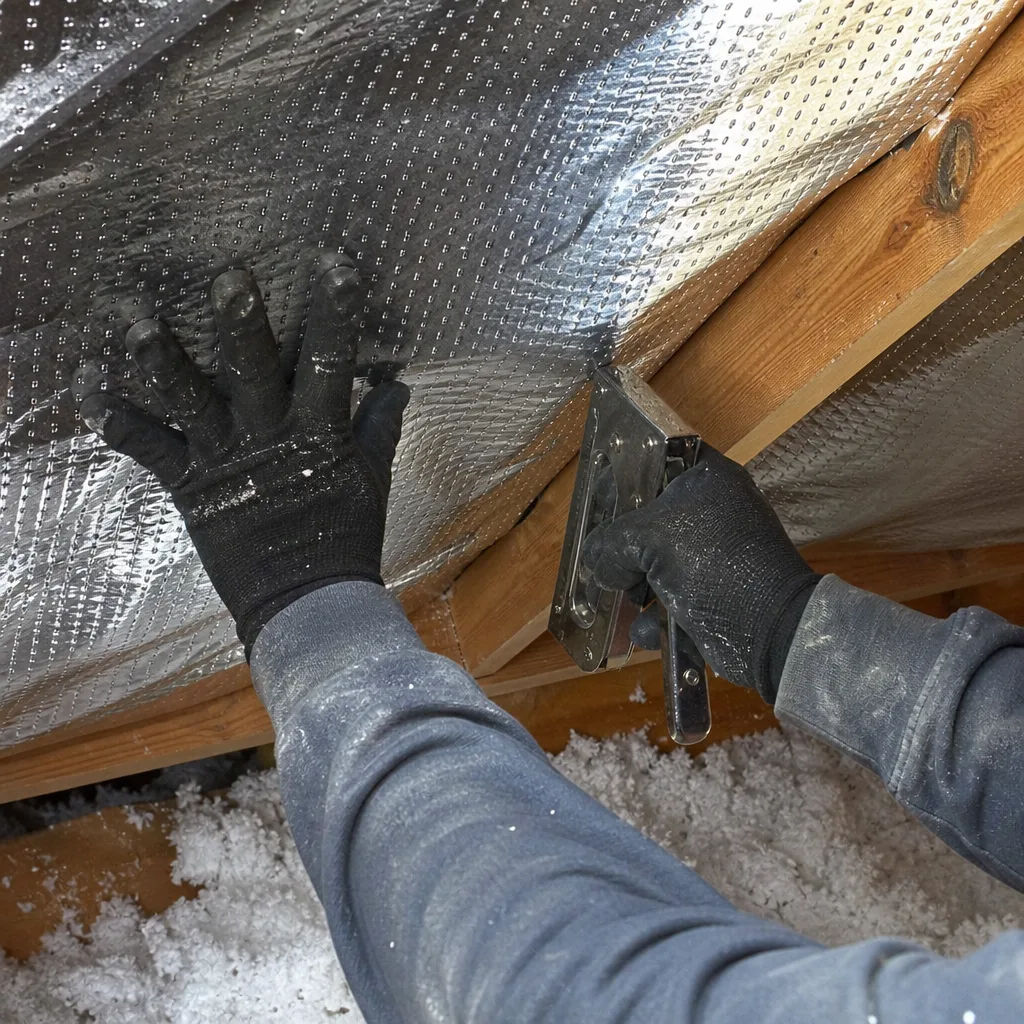
- Radiant barrier retrofits that don’t touch structure, wiring, or mechanical systems
- Attic air sealing on its own when no other scope is changing
Two caveats matter: the county’s own interpretation can shift, and if the residential building permit for the project was pulled for a larger scope (a kitchen remodel, an addition), the insulation work is often folded into that permit rather than stapled on separately. If you’re not sure which side of the line your job sits on, the simplest move is to call the county’s building department directly or ask the contractor to put their permit interpretation in writing on the estimate. That one line protects you more than any verbal promise.
What are the Clark County amendments to the energy code?
This is the layer most homeowners miss. Nevada adopts the International Energy Conservation Code as its statewide baseline, and Clark County then publishes its own amendments on top. Those amendments aren’t trivial tweaks, they’re the differences between passing and failing. The county’s amendments are adopted through its code and amendments process and can change between code cycles, so always check the current edition the county publishes rather than trusting a contractor’s memory.
In practice, the amendments that bite insulation work hardest are:
- Climate zone alignment. Clark County sits in a very hot climate zone, and the code’s R-value targets for ceilings, walls, and floors reflect that. A contractor used to Reno or rural Nevada’s targets may under-insulate a Paradise attic and think it’s compliant.
- Radiant barrier treatment. Clark County’s amendments and its broader local practice treat radiant barriers as part of the energy compliance picture, not a decorative add-on, which affects how an insulation scope is evaluated.
- Air sealing and duct requirements. Where the county amendments extend air sealing or duct sealing requirements beyond the state baseline, an attic job that looks like an insulation-only scope is treated as a bigger compliance job.
- Vapor barrier and crawl space vapor control. In a climate where the threat is heat and dry conditions, vapor control requirements differ from the wetter climates the code language was originally written around.
Here in Paradise we routinely see jobs where a well-meaning contractor installs to the state’s IRC numbers, and the inspector rejects it because the Clark County amendments require a different R-value or a full air-sealing set. That gap is the single most common reason a Paradise insulation inspection fails. Our advice: on any permitted job, ask the contractor to state in writing which code edition and which Clark County amendment set they’re building to.
Nevada state baseline vs. Clark County: where they differ
Here’s the practical comparison the Nevada contractor community works from. The state sets the floor. Clark County raises it.
- Code edition: Nevada adopts the IECC statewide and can lag or lead the county on which edition is current. Clark County publishes its own adoption and amendments cycle.
- Climate zone assignment: The state has multiple zones across a large, varied geography. Clark County’s zone is hot and dry, which pushes ceiling insulation targets higher than what a contractor from northern Nevada may default to.
- Radiant barrier: Treated as part of the energy package in Clark County rather than an optional upgrade.
- Duct and air sealing: County amendments can extend requirements beyond the state baseline on jobs that combine insulation with envelope work.
- Enforcement: The county’s building department is the AHJ (authority having jurisdiction) and enforces its amendments, not the state’s floor.
What this means for anyone hiring insulation work in Paradise: the contractor’s answer to “which code are you building to?” should be “the current Clark County edition and its amendments,” not “the state code.” If the answer is the latter, the job is at risk of failing inspection, and you’ll be paying for the rework. For a deeper look at what compliant work looks like in practice, our attic insulation in Paradise page walks through the material and R-value picture for local homes.
What does an insulation inspection actually check?
A third-party insulation and energy inspection in Clark County is a pass/fail review of whether the installed work matches what was permitted and what the code requires. The inspector isn’t grading the contractor’s craftsmanship in a general sense, they’re verifying specific measurables. In our experience, here’s what gets checked:
- Installed R-value. Measured against the permitted spec and the current Clark County target for that assembly, not the contractor’s original guess.
- Coverage and depth. Blown-in insulation is documented for depth and density, spray foam for thickness, batt for gaps and compression.
- Air sealing completeness. The inspector checks that penetrations, top plates, and electrical fixtures are sealed where the scope required it.
- Vapor barrier and crawl space vapor control. Presence, coverage, and correct orientation of any vapor barrier included in the scope.
- Radiant barrier installation. Correct product, correct coverage, correct installation details around wiring and penetrations.
- Material compliance. Products meet the listing and manufacturer spec for the assembly. This is where brand matters, a job installed with Owens Corning or Icynene materials that meet the specified listing is easy to verify; a job installed with mislabeled material isn’t.
- Duct sealing and mechanical tie-ins. Where the scope touches ductwork, the inspector verifies those details too.
What an inspector does not do is crawl through your home grading aesthetics. A clean install and a messy install that meets spec both pass. That’s why the spec matters more than the appearance. If your scope includes a crawl space, our crawl space encapsulation and vapor barrier in Paradise page covers the vapor control details inspectors look for.
How to prepare your home so it doesn’t fail on a technicality
Most failed inspections we’ve seen weren’t caused by bad insulation work. They were caused by avoidable technicalities on the day of the inspection. Here’s our pre-inspection checklist, in the order homeowners can knock it out:
- Clear attic access. The inspector needs safe, unobstructed access to the attic hatch and enough headroom to see the full installation. Boxes, holiday decorations, and old shelving stored in the attic are the number-one reason an inspection gets rescheduled.
- Confirm the permitted scope matches the work. If the permit says R-38 and the installed work is R-30, the job fails regardless of how good the install looks. Read the permit before the inspector does.
- Keep the manufacturer labels and spec sheets. If your contractor used Owens Corning, GreenFiber, or another listed manufacturer, the product labels should be on-site or photographed before the attic closes up.
- Make sure any mechanical work passes first. If the scope includes ductwork or a mechanical tie-in, that inspection usually needs to happen before the insulation inspection, not after.
- Have the signed contract and permit on hand in the house. It sounds obvious. It’s also what the inspector asks for first.
- Don’t stage or finish anything above the insulation before pass. Drywall, ceiling finishes, and even attic flooring over a compliance line should wait until the inspection clears.
In Paradise and across the Las Vegas Valley, the biggest single cause of failed inspections we see is the permit spec and installed spec not matching. That’s a contractor problem to fix, not a homeowner one, but it’s worth reading the permit yourself so you know which spec the inspector is holding you to. Also worth flagging: attic and crawl space work can put a technician near wiring, gas lines, or structural framing, and any job that touches a gas appliance or a flue is not a DIY scope. Call a trained professional for anything on that list.
Why unpermitted insulation complicates a Nevada home sale
Nevada requires sellers to disclose known material defects and conditions in the Seller’s Real Property Disclosure Form. Unpermitted work isn’t automatically a material defect, but if you know work was done without a permit and it affects the home’s value, use, or safety, disclosure gets complicated fast. The practical fallout is more expensive than disclosure questions:
- Buyer’s inspection flags it. A buyer’s home inspector will usually catch unpermitted insulation work, especially if an attic looks re-insulated without a permit history.
- Lender and appraisal trouble. Some lenders ask for permit history on any recently re-insulated home, and a missing permit can delay closing or force an as-built inspection.
- Buyer demands rework or credit. Even when the work is technically fine, a missing permit gives the buyer leverage to demand a credit or walk.
- Insurance questions. Some homeowner policies ask about permitted versus unpermitted alterations when a claim touches the affected area.
- As-built permitting. The county can sometimes permit the work retroactively through an as-built process, but that inspection is stricter than a fresh permit, and any noncompliant details have to be torn out and redone.
The fix is simpler than the problem: make sure your contractor pulls the permit before the insulation goes in, and keep the permit number and final inspection paperwork with your home records. In Paradise, where homes turn over regularly and buyers know what a permitted attic upgrade should look like, this paperwork often decides a negotiation.
How to verify your contractor pulled the permit
Verifying the permit is five minutes of work and it protects you from the whole list above. Here’s the process:
- Ask for the permit number in writing. The number should appear on the estimate or on a separate permit confirmation the contractor sends you. A verbal “yeah, we pulled it” doesn’t count.
- Look it up on the Clark County building department’s online portal. Enter the permit number and confirm the scope, address, and contractor name match what you agreed to.
- Confirm the permit covers the scope you signed. A permit for “attic insulation” won’t cover a scope that also includes radiant barrier or crawl space vapor barrier. The permit has to match the job.
- Check the status the day the work finishes. The permit should show an inspection scheduled or passed. If it’s still “permit issued, work not started” the day after the crew leaves, something is wrong.
- Get the final inspection result in writing. Ask the contractor to send you the inspector’s final result, and keep it with your home records.
The barrier to entry on unpermitted work is that homeowners don’t know the permit exists until something goes wrong. That’s exactly why we tell every Paradise homeowner we work with to ask for the permit number before work starts. If a contractor won’t put it in writing, that’s your answer. For homeowners in Paradise who want a full picture of the products and installation details that go with a permitted job, our spray foam insulation in Paradise and crawl space encapsulation pages lay out what inspectors are looking for at each stage.
Common Mistakes to Avoid
- Trusting a state-code answer from a county-code job. If a contractor says they build to the state IRC and doesn’t mention Clark County amendments, your Paradise job is at risk of failing inspection on the amendments alone.
- Skipping the permit to “save time.” The permit takes a few days. The unpermitted work can cost you a buyer or a credit months later. Nobody in Paradise has ever come out ahead on this trade.
- Letting the contractor self-certify the spec. Insist on a written R-value target and a permit spec that match, and read them before work starts, not after.
- Finishing drywall over insulation before the inspection. Once the walls close up, the inspector can’t see the install and the job has to be reopened.
- Forgetting that radiant barrier changes the scope. A job that starts as attic insulation can become a larger energy package if a radiant barrier is added. The permit and the R-value targets change with it.
- Assuming the crawl space vapor barrier is exempt. Vapor barrier work on a crawl space is often folded into the insulation permit, and skipping it can leave the job technically incomplete.
- Storing anything in the attic before the inspector arrives. A stacked attic blocks access and gets the inspection rescheduled, which pushes your final payment and your warranty clock back too.
When to Call a Professional
Call a professional when the job involves anything beyond adding blown-in insulation over existing material. Wall re-insulation, spray foam that changes the air-sealing profile, radiant barrier retrofits, crawl space vapor barrier work, and anything combined with a remodel or change of use are all permit-scope jobs, and the inspection risk isn’t worth gambling on. Call a professional immediately if you smell gas near an attic penetration, if you see damaged wiring near insulation, or if the work touches a gas appliance or flue. Those are not homeowner competencies, and a wrong move there is dangerous. Walt’s Insulation Paradise offers free estimates in Paradise, handles the permit scope and inspection coordination on permitted jobs, and answers the phone live around the clock. Call (844) 978-0556 to talk through your project with someone who knows the Clark County amendments by heart.
Frequently Asked Questions
It depends on the scope. Adding blown-in insulation over existing attic insulation without changing the R-value target below the code compliance line typically doesn’t need a permit. Re-insulating an entire attic assembly, changing the R-value target, adding radiant barrier to a permitted scope, or folding insulation into a larger remodel does. When in doubt, call the Clark County building department or ask the contractor to put their permit interpretation in writing.
Clark County’s amendments to the IECC set the current attic R-value target for the county’s hot climate zone, and that target is higher than what contractors working in Reno or rural Nevada typically default to. The exact number changes between code cycles, so confirm the current edition on the Clark County building department’s site and match it against the spec on your permit before work begins.
Yes, and it’s the most common failure we see in Paradise. A contractor installs to the state IRC minimum, the county inspector holds the job to the Clark County amendments, and the work has to be redone at your expense unless the contractor eats the cost. The fix is to insist on a written code reference before the job starts: current Clark County edition and amendments, not the state baseline.
It depends on the scope, but the rework usually involves tearing out and re-installing the affected insulation plus the inspection rescheduling fee. Because the numbers vary widely, call (844) 978-0556 for an exact quote on your specific scope, our estimates and second opinions on any written estimate are free.
Nevada’s Seller’s Real Property Disclosure Form requires disclosure of known material defects and conditions that affect the home’s value, use, or safety. Unpermitted insulation work isn’t automatically a defect, but if you know it was installed without a permit and it affects the home, you should disclose it. A buyer’s inspection will usually flag unpermitted work anyway, so the safer path is to permit the work correctly the first time and keep the paperwork.
Ask for the permit number in writing, then look it up on the Clark County building department’s online permit portal and confirm the scope, address, and contractor name match what you agreed to. Check the status again the day the crew finishes to confirm an inspection is scheduled or passed, and get the final result in writing. Call (844) 978-0556 if you want a second opinion on any written insulation estimate before you sign it.
Not usually separately, but they’re often folded into the insulation permit rather than treated as add-ons. If your scope includes crawl space vapor barrier or radiant barrier work, make sure the permit covers them, because a permit that doesn’t match the scope will fail inspection even if every product meets spec.
The Bottom Line
Nevada’s insulation code is only half the story. Clark County amends the IECC, and those amendments are the rules a Paradise job actually gets held to. If you remember nothing else: ask for the permit number in writing, confirm the permit covers the full scope including radiant barrier and vapor barrier, confirm the R-value target on the permit matches the current Clark County amendment set, and don’t close up drywall or finish anything over the insulation before the inspection clears. Keep the final inspection result with your home records. That paperwork is what protects a home sale, an insurance claim, or a warranty call two years from now. Whether you’re re-insulating a Paradise attic or encapsulating a crawl space, permitted, code-compliant work done by a contractor who knows the amendments is the difference between a passing inspection and a costly rework. If you want a straight read on your specific project and scope, Walt’s Insulation Paradise home is the place to start, and our team answers the phone live 24/7. Call (844) 978-0556 for a free estimate, and we’ll walk you through what your Clark County permit needs to cover before a single bag of insulation comes off the truck.
Written by the team at Walt’s Insulation Paradise.