
Last updated November 18, 2026
How Long Does Blown-In Insulation Take? Timelines and What to Expect
We’ve finished attic blown-in jobs in under three hours. We’ve also had jobs stretch to two days – not because anything went wrong, but because the attic had conditions that needed honest prep before a single bag was loaded. That gap surprises homeowners, and it’s the reason “how long does blown-in insulation take” has no single tidy answer. A standard Paradise attic usually runs three to six hours of actual work, but the real timeline depends on access, what’s already up there, and whether your contractor builds in time for the prep and final depth check. This guide gives you the hour-by-hour picture, the variables that add time, and how to read an estimate well enough to spot a crew planning to sprint.
Quick Answer
A typical blown-in insulation job on a Paradise attic takes three to six hours from arrival to cleanup for a single-story home in reasonable condition. Prep work, obstructions, and existing insulation that needs removal can push that to a full day or split the job across two. The part most estimates skip is the final depth confirmation – the step that proves you actually got the R-value you paid for.
Table of Contents
- An Hour-by-Hour Breakdown of a Standard Paradise Attic Job
- What Actually Extends the Timeline
- Why the Final Depth Check Matters More Than the Blowing
- What to Do Before the Crew Arrives
- How to Read an Estimate for Realistic Timing
- R-Value, Climate, and Why Paradise Attics Behave the Way They Do
- Blowing vs. Spray Foam vs. Batts: Timeline Comparison
- Common Mistakes to Avoid
An Hour-by-Hour Breakdown of a Standard Paradise Attic Job
Here’s what a straightforward single-story attic in Paradise looks like when nothing slows it down. Times are approximate and shift with square footage, but the sequence is consistent on every job we run.
- Arrival and setup (30 – 45 minutes). The crew protects floors, lays drop cloths along the path to the attic access, and stages the blowing machine and hose. Bags get loaded near the access point so the run stays short.
- Attic inspection and prep (45 – 90 minutes). This is where air sealing happens: gaps around recessed lights, top plates, wire penetrations, and the attic hatch get sealed so the insulation can do its job. Baffles go in at the eaves to keep airflow from the soffit vents. Any old insulation that’s compressed or contaminated gets marked for removal or raking.
- Blowing (1.5 – 3 hours). The crew feeds material through the hose and works in passes, building depth evenly across the field. Fiberglass (we install Johns Manville and Knauf) and cellulose (GreenFiber) both blow in this window; spray foam runs differently and takes longer to apply in lifts.
- Depth gauges and confirmation (20 – 30 minutes). Markers are set at the target depth before blowing and checked after. A measuring stick goes down in several spots across the attic to verify the installed depth against the R-value target. This step is the difference between a job that meets spec and one that comes in short.
- Cleanup and walkthrough (20 – 30 minutes). Hose comes down, the machine gets broken out, debris gets bagged, and you walk the attic hatch with the crew to see the finished depth before they leave.
Add those up and you land at roughly four to six hours for a standard Paradise job. Larger footprints, two-story homes with tight attic access, or prep-heavy conditions push it toward a full day.
What Actually Extends the Timeline
Every blown-in job has the same basic pieces. What changes is how much friction sits between them. These are the variables we see most often in Paradise homes.
- Attic access size. A narrow scuttle hole in a closet means the hose and the crew have to work through a small opening. A full pull-down stair or a wide hatch speeds the whole job up. If the access is buried under stored boxes, that’s time on the front end.
- Condition of existing insulation. Old, matted fiberglass that’s been walked on for twenty years has lost most of its R-value. It can be raked and topped off, but if it’s contaminated with rodent droppings or moisture damage, it needs removal first – which is a separate job (we handle attic insulation in Paradise including removal and replacement) and adds hours.
- Obstructions. Ductwork, recessed light cans, bath fan housings, plumbing vent stacks, and knee-wall framing all interrupt the blow pattern. Knee walls in Paradise homes with low-slope roofs take extra time because the crew has to work around the slope and keep the baffles clear.
- Air sealing scope. A quick seal of major gaps is fast. A thorough seal across a large attic takes longer but is what lets the R-value hold. Skipping it and just burying the gaps is one of the shortcuts we see on other crews’ work.
- Weather and season. Summer attic temperatures in Paradise regularly push past 130°F by midday. Crews start early, take more breaks, and sometimes split a large job across two mornings rather than push through heat that makes the work unsafe.
None of these are surprises to a prepared crew. They’re built into a realistic estimate.
Why the Final Depth Check Matters More Than the Blowing
Here’s the part most homeowners never see and some contractors never do. Blown-in insulation is sold by R-value, but installed by depth. The two are related – each inch of a given material delivers a set R-value – but a crew that blows fast and leaves without measuring is guessing at whether you got what you paid for.
Settling is real. Loose-fill fiberglass and cellulose both settle after installation, and some materials settle more than others. A job that looks deep on day one can be two inches shallower within a season. Add uneven blow patterns – the corners of an attic often get less material than the center because the hose runs more naturally down the middle – and you can end up 20% short on R-value without anyone noticing until the next energy bill.
The fix is simple: measure at multiple points after blowing, compare against the target depth for the R-value specified, and top off wherever the depth reads short. That’s what the final depth check does. On our jobs it’s a required step, not an optional add-on. It’s also a big part of why the Done Right Promise exists – if the depth isn’t right, we make it right, no runaround.
Ask your contractor how they verify installed depth. The answer tells you a lot about how they run a job.
What to Do Before the Crew Arrives
A little prep on your end saves time and money on the day. We hand this list to every Paradise homeowner before a scheduled install.
- Clear the attic access path. Move cars out of the driveway, clear the floor near the hatch or stair, and pull down anything stored near the opening. A blocked path is billable time.
- Empty the attic if you store things up there. Bags, boxes, holiday decorations – anything on the decking has to come out before the crew can blow an even field. If it’s a lot, plan a couple of hours of your own time.
- Note any water stains or rodent signs. Tell the crew where you’ve seen them. Attics with active rodent activity need rodent proofing before insulation goes in – we handle that as part of our Paradise insulation work, but it has to be scheduled, not squeezed in.
- Move pets and small kids. The blower is loud and the hose moves through the house. Plan to have pets settled in a quiet room.
- Ask about a second opinion on your written estimate. If you’ve already got an estimate in hand from another contractor, we’ll review it free. More than one Paradise homeowner has found out a quote left out the depth confirmation or air sealing entirely.
Doing these five things the night before is the difference between a four-hour morning and a six-hour one.
How to Read an Estimate for Realistic Timing
An estimate that quotes a two-hour window for a full attic blow with prep and depth check is either a small job or an unrealistic quote. Here’s how to tell what you’re looking at.
- Does it list air sealing separately? If it doesn’t, either the contractor is folding it in (ask) or skipping it (a problem).
- Does it specify R-value target and material? “Blown-in insulation” alone isn’t an estimate. The line should say something like “R-49, loose-fill fiberglass, Johns Manville” or “R-38, cellulose, GreenFiber.”
- Does it include removal of existing insulation if needed? Removal is a distinct line item and a distinct time block. A quote that mentions “topping off” without inspecting your current insulation is guessing.
- Does it describe the depth confirmation? Look for language about measuring installed depth, verifying R-value, or final walkthrough. If it’s absent, ask.
- Is there a time window, or just a price? Reputable estimates give an arrival window and a rough finish estimate. Not a promise to the minute, but a range.
- Does prep work appear? Baffles, sealing, tape, drop cloths, sealing the attic hatch – these take time and materials. If the quote reads like “blow and go,” it probably is.
A fast quote usually means a fast job. That can be fine for a small top-off. For a full attic needing prep, depth confirmation, and a proper R-value target, the honest quote takes longer and costs a bit more – and holds up over the years.
R-Value, Climate, and Why Paradise Attics Behave the Way They Do
Paradise sits in a desert climate. Summer attic temps climb into the 130s, winter nights drop into the 30s, and the swing between them is wide. That daily expansion and contraction is hard on insulation, particularly loose-fill that wasn’t blown to the right depth or wasn’t sealed properly at the top plates.
The U.S. Department of Energy recommends different R-value targets by climate zone. Paradise falls into a hot-dry zone, and the DOE-recommended attic range for that zone tops out well above what a lot of older Paradise homes actually have. Homes built in the 1970s and 1980s often carry R-11 or R-19 worth of original insulation – a third of what’s recommended today. That gap shows up on your summer power bill as cooling that runs all afternoon without holding the set temperature.
R-value target is what determines how much material goes into your attic, which in turn drives how long the blowing takes. A target of R-49 needs more material than R-38, and more depth. This is why a Paradise job quoted at four hours and a Las Vegas or Sparks job quoted at three hours aren’t the same job – the climate zone and the existing R-value set the spec.
If you’re not sure what’s currently in your attic, an energy audit is a reasonable starting point. We take R-value readings across the attic and tell you what target makes sense for the home.
Blowing vs. Spray Foam vs. Batts: Timeline Comparison
Blown-in is the fastest of the common attic insulation options for a similar R-value target, but it’s worth knowing where the others land so you can compare apples to apples on a quote.
- Blown-in fiberglass or cellulose: 3 – 6 hours for a standard Paradise attic. Fastest option when the attic is accessible and prep is minimal. Cellulose (GreenFiber) tends to run slightly slower than fiberglass (Johns Manville, Knauf) because of material density and hose friction.
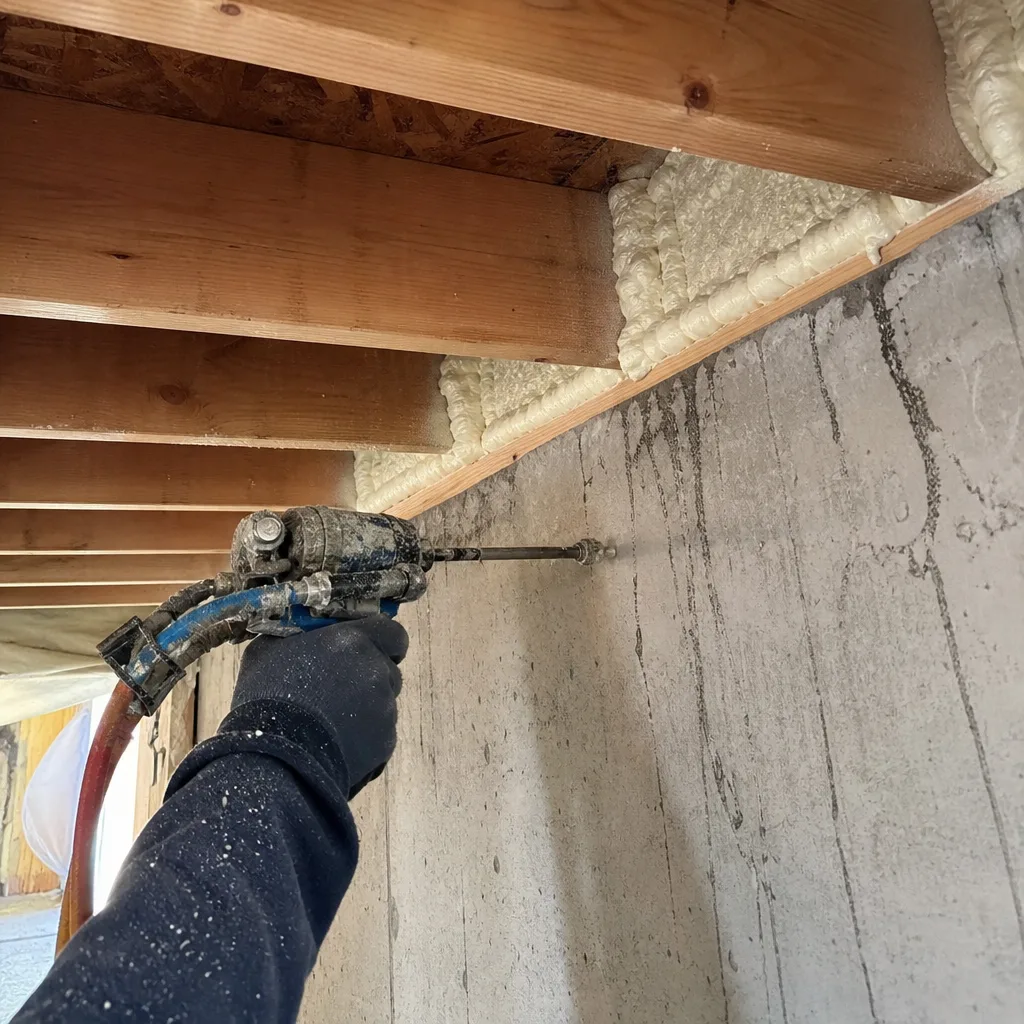
- Spray foam: 5 – 8 hours for a similar attic, sometimes split over two visits if the total area is large. Applied in lifts and requires cure time between passes. See our spray foam insulation in Paradise page for what that job looks like up close.
- Batt installation: 4 – 8 hours for a full attic, often slower because rolls have to be cut and fitted around obstructions by hand. Usually reserved for areas where blowing isn’t practical, like walls or tight cavitites.
If your home has a crawl space with moisture issues, that’s a separate project – crawl space encapsulation and vapor barrier in Paradise runs a day or more depending on square footage, and it’s usually best done before attic work so the whole envelope comes together.
Common Mistakes to Avoid
- Burying soffit vents. A crew that blows material right over the eaves blocks the intake airflow and can push the attic into an unhealthy moisture pattern. Baffles are non-negotiable, and they add time to the job.
- Skipping air sealing to save an hour. Insulation slows heat movement; it doesn’t stop air. Without sealing, the attic leaks air around light fixtures and top plates, and the R-value you paid for never fully performs.
- Blowing over the attic hatch without sealing it. A weatherstripped, insulated attic hatch cover is cheap and fast to install, and skipping it turns an insulated attic back into a leak.
- Quoting a time without seeing the attic. A phone quote on a Paradise home that hasn’t been inspected is a guess. A truck that shows up expecting two hours and finds ten inches of old, matted fiberglass to rake is a truck that runs late or rushes.
- Not measuring depth after the blow. The most common shortcut and the largest cause of a job coming in 20% short on R-value. Ask for the depth reading.
- Ignoring rodent activity before insulating. Blown-in over an active rodent problem is a re-do waiting to happen. Attic cleaning and rodent proofing need to come first.
- Choosing a contractor on price alone. The lowest bid on a blown-in job is often the one with no air sealing, no depth check, and no plan for the material that has to settle. You pay the difference in energy bills and a second install.
When to Call a Professional
Most attic insulation work is not a DIY project. Attics in Paradise are cramped, blisteringly hot in summer, and full of hazards – nails through the roof decking, exposed wiring, and loose insulation that makes footing uncertain. If your attic access is a narrow scuttle in a closet, if the existing insulation has moisture damage or rodent contamination, if you’re dealing with air sealing around recessed lights or a duct system, or if your home needs a specific R-value target calculated for its climate zone, call a trained crew. The same goes for anything requiring removal: bagging up old fiberglass or cellulose safely means proper respirators, protective gear, and knowing what to do with it afterward.
Walt’s Insulation Paradise offers free estimates in Paradise – call (844) 978-0556. A live person answers every call, day or night. If you’ve already got a competing written estimate, we’ll give you a free second opinion on it, and there’s no trip charge inside our service county. Our technicians have up to 26 years of experience, and every job is backed by the Done Right Promise.
Frequently Asked Questions
Three to six hours of working time for a standard single-story Paradise attic in good condition. That includes prep, air sealing, the blow itself, depth confirmation, and cleanup. Larger homes, tight access, or removal of old insulation push it toward a full day or a two-visit job.
Yes. The majority of Paradise attic jobs finish in a single day. Jobs that stretch to two days usually involve removal of contaminated or matted old insulation, a large footprint, tight attic access, or scheduling around summer heat. Call (844) 978-0556 and we’ll tell you honestly what your timeline looks like once we’ve seen the attic.
Loose-fill fiberglass and cellulose don’t need a cure time; you can go back into the attic the same day once the crew is finished. Spray foam is the material that requires cure time between lifts, and that affects the schedule differently. For a blown-in job, once the crew walks out, the attic is ready.
Because it’s the part that proves you got what you paid for. After blowing, the crew measures installed depth at several points across the attic and compares them to the target for the R-value in your quote. Topping off short spots takes twenty to thirty minutes. Skipping it is how jobs come in 20% short on R-value without anyone noticing – so we don’t skip it.
Spring and fall are the comfortable months for the crew and the easiest months to schedule. That said, blown-in insulation is an all-season job. Summer attic temps push past 130°F by midday, so crews start early to stay cool and safe. Winter is a fine time to install and usually has more open scheduling – call (844) 978-0556 to see current availability.
Cost varies by square footage, existing condition, material choice, and R-value target, so an accurate number requires an attic inspection. We quote upfront with no surprises, and every estimate is free. If you’ve got a written estimate from another contractor, we’ll give you a second opinion on it at no charge. Call (844) 978-0556 for your exact quote.
The Bottom Line
Blown-in insulation is a fast job when the attic is ready and a longer one when it isn’t. A typical Paradise attic runs three to six hours on install day, but the real timeline includes the prep, the air sealing, and the depth confirmation at the end – the step that proves you actually got the R-value you paid for. Skipping that final check is the most common way a job quietly comes in 20% short. Read every estimate for those three things: prep, depth check, and a clear R-value target. If they’re missing, the quote is faster than the job. Call Walt’s Insulation Paradise at (844) 978-0556 for a free estimate, a free second opinion on any written quote, and a job backed by the Done Right Promise. Phones answered by a live person, 24/7.
Written by the team at Walt’s Insulation Paradise.