
Last updated November 18, 2026
Insulation Emergency Preparedness Guide for Paradise Homes
When Paradise hits 115°F and your AC can’t keep up, the emergency usually isn’t your HVAC unit. It’s an insulation failure that’s been building for three summers and finally crossed the threshold. Most homeowners call the HVAC tech first, pay a diagnostic fee, and learn the equipment was never the problem. Insulation emergencies in Paradise come in three forms: sudden thermal failure during a heat event, storm or monsoon water damage, and fire and smoke intrusion. Each demands a different response, a different order of calls, and different documentation for insurance. This guide walks you through all three, plus the steps to take right now that make recovery faster and cheaper when something goes wrong.
Quick Answer
An insulation emergency in Paradise is any situation where failed, wet, or contaminated insulation is actively driving unsafe temperatures, moisture damage, or air quality problems in your home. The right first move depends on the type: for heat emergencies, do a rapid thermal check before blaming your HVAC; for water intrusion, stop the source and document everything within 24 hours; for fire and smoke, assume the insulation is compromised even if it looks fine. In every case, call (844) 978-0556 for a free assessment before remediation begins so nothing gets torn out before your insurer sees it.
Table of Contents
- Heat Emergency: Rapid Thermal Assessment
- What to Tell Your HVAC Tech vs. Your Insulation Contractor
- Water Intrusion: The First 24 to 48 Hours
- Monsoon Flooding and Roof Leaks in Paradise
- Fire and Smoke Damage: What’s Salvageable
- Who to Call and in What Order
- What to Document for Insurance
- Emergency Preparedness Steps to Take Now
Heat Emergency: Rapid Thermal Assessment
Paradise summers push attic temperatures well past 150°F, and a compromised insulation layer turns that attic into a radiator sitting on top of your living room. Before you spend money on an HVAC diagnostic, run a quick thermal check. This takes about fifteen minutes and tells you whether insulation failure is part of the problem.
- Check the temperature gap room by room. Walk through with a thermometer or infrared gun. If the rooms directly under the attic run 8 to 12 degrees hotter than rooms with a buffer (garage-adjacent, shaded), the ceiling plane is likely the weak link.
- Feel the ceiling. A ceiling that’s warm to the touch on a 110°F afternoon is radiating heat downward. That’s insulation that isn’t doing its job.
- Look at your attic access panel. If the panel or hatch feels hot and the attic smells dry and baked, you may be dealing with settled or compressed insulation.
- Check the vents. Weak airflow from ceiling registers often means the ductwork is running through an overheated attic. That’s an insulation and air sealing issue, not always an equipment issue.
- Note your AC run time. An AC that runs continuously and still can’t hold setpoint is working against a failing envelope.
If two or more of these point to the attic, an attic insulation assessment in Paradise should come before an expensive HVAC replacement. In our experience across Paradise, blown-in fiberglass and cellulose that’s settled below its rated depth is one of the most common causes of “my AC is broken” calls we get in July and August.
What to Tell Your HVAC Tech vs. Your Insulation Contractor
Knowing which pro to call, and what to say, saves you from paying twice for the same diagnosis.
Tell your HVAC tech: the exact setpoint you’re trying to hit, the actual temperature reading in each room, how long the system runs before it gives up, and whether the gap between setpoint and actual narrows at night. That last detail matters because an HVAC problem shows up in run time, while an insulation problem shows up in the gap between what the system delivers and what the house holds. If the gap shrinks at night when outdoor temps drop, insulation is a strong suspect.
Tell your insulation contractor: the age of the home if you know it, whether the attic has ever been re-insulated, whether you’ve seen rodents or droppings, and whether you’ve had any roof or plumbing leaks. Mention your attic access location and whether you can see the joists. A tech can measure depth and R-value on arrival, but knowing the history helps. Our technicians have up to 26 years of experience, and we can usually tell from a fifteen-minute walk-through whether the problem is depth, compression, air leaks, or all three.
One more thing: don’t let anyone talk you into a full HVAC replacement before you’ve had the attic checked. In Paradise’s climate, insulation failure masquerades as equipment failure more often than most homeowners realize.
Water Intrusion: The First 24 to 48 Hours
Wet insulation is an emergency because it stops insulating and starts growing mold, sometimes within 48 hours in Paradise’s warm, humid monsoon season. The clock starts the moment water touches the material. Here’s the order to work in.
- Stop the source. If it’s a roof leak, get a tarp up or call a roofer. If it’s plumbing, shut off the water. Nothing else matters until the water stops coming in.
- Kill the power to affected circuits. Water and attic wiring don’t mix. If you can’t safely reach the breaker, call an electrician before you climb into the attic.
- Document before you touch anything. Photos of the wet insulation, the ceiling stains, the source of the leak, and the attic access. Timestamp everything.
- Get air moving. Fans and dehumidifiers in the attic and the rooms below. Not a shop vac on the insulation itself; you’ll just spread the mess.
- Call for an assessment. Not every wet insulation needs full removal, but fiberglass batts that were soaked and have collapsed, and any cellulose that got saturated, usually do. We’ve seen plenty of Paradise attics where a small leak spread underneath the top layer and soaked the bottom, which is invisible from a quick look.
- Decide on removal versus drying. Spray foam has different rules than batt or blown-in. A crawl space and vapor barrier inspection in Paradise is also smart if the leak ran downward, because crawl space insulation and vapor barriers take on moisture and hold it.
Do not let a remediation crew tear out wet insulation before your insurer has seen it or accepted a claim. If urgency forces removal, photograph extensively first and keep the removed material bagged and photographed until the claim is settled.
Monsoon Flooding and Roof Leaks in Paradise
Paradise’s monsoon season runs roughly July through September, and when it rains, it pours hard and fast. Flat and low-slope roofs, aging flashing, and clogged scuppers send water sideways into places homeowners don’t think to check. Insulation damage from monsoon flooding usually shows up in one of three ways: ceiling stains that appear hours after the storm, a musty smell in rooms below the attic, and a spike in indoor humidity that doesn’t drop when the AC runs.
If a monsoon storm just passed and you suspect water got in, check these spots first:
- Ceiling corners and wall-ceiling joints on the windward side of the house.
- Around any roof penetrations: vents, chimney, skylights.
- The attic access panel and any insulation that sits directly beneath it.
- Crawl spaces and any low point where water pools.
- Any room that smells damp even after the AC has run for a few hours.
Paradise neighborhoods with older housing stock often have insulation that’s already been wet at least once, then dried and been left in place. Repeated wetting breaks down the binder in fiberglass and compresses it, so the attic slowly loses R-value over years. By the time a monsoon pushes it over the edge, you’re looking at replacement, not drying.
Fire and Smoke Damage: What’s Salvageable
Here’s the counterintuitive part: smoke-damaged insulation that looks completely intact usually has to come out. Smoke carries soot, ash, and combustion byproducts into every porous surface it reaches, and insulation is almost all porous surface. That means the material is embedded with particles that will keep off-gassing into your living space long after the fire is out. If your home was anywhere near a wildfire, or you had a fire inside, assume the attic insulation is compromised until a professional tells you otherwise.
What’s typically salvageable:
- Sealed spray foam that was not physically burned and not exposed to heavy smoke infiltration.
- Mineral wool products like Rockwool, which hold up better to heat and moisture than fiberglass and can sometimes be cleaned if the soot load is light.
- Rigid foam board that was shielded from smoke by an air barrier.
What usually is not:
- Loose-fill fiberglass and cellulose. Both trap smoke particles and are essentially impossible to clean in place.
- Any fiberglass batt that has visible soot or a smoky odor.
- Anything wet from firefighting water, even if it looks clean.
Replacement is also a code and air quality issue. A fire-rated assembly requires intact materials, and smoke residue will keep triggering that “campfire in the attic” smell every time your HVAC cycles. If your home is in a Paradise neighborhood that saw recent wildfire activity, we’ve walked quite a few attics where the insulation was left in place and the smell never fully went away.
Who to Call and in What Order
The order of calls is the single biggest factor in how smoothly an insulation emergency resolves. Here’s the sequence that keeps you from paying twice or losing a claim.
- 911 or a fire crew if there’s active fire or smoke.
- Your utility or plumber to stop water or gas if either is involved.
- Your insurance company to open a claim and get a claim number. Do this before remediation. Some policies require pre-approval for removal.
- An electrician if wet insulation is near wiring or the panel is compromised.
- A roofing or leak repair pro to stop the source if the water is still coming in.
- An insulation contractor for assessment, removal, and replacement.
- An HVAC company only after the envelope problem is addressed. Otherwise you’ll be re-diagnosing the same issue.
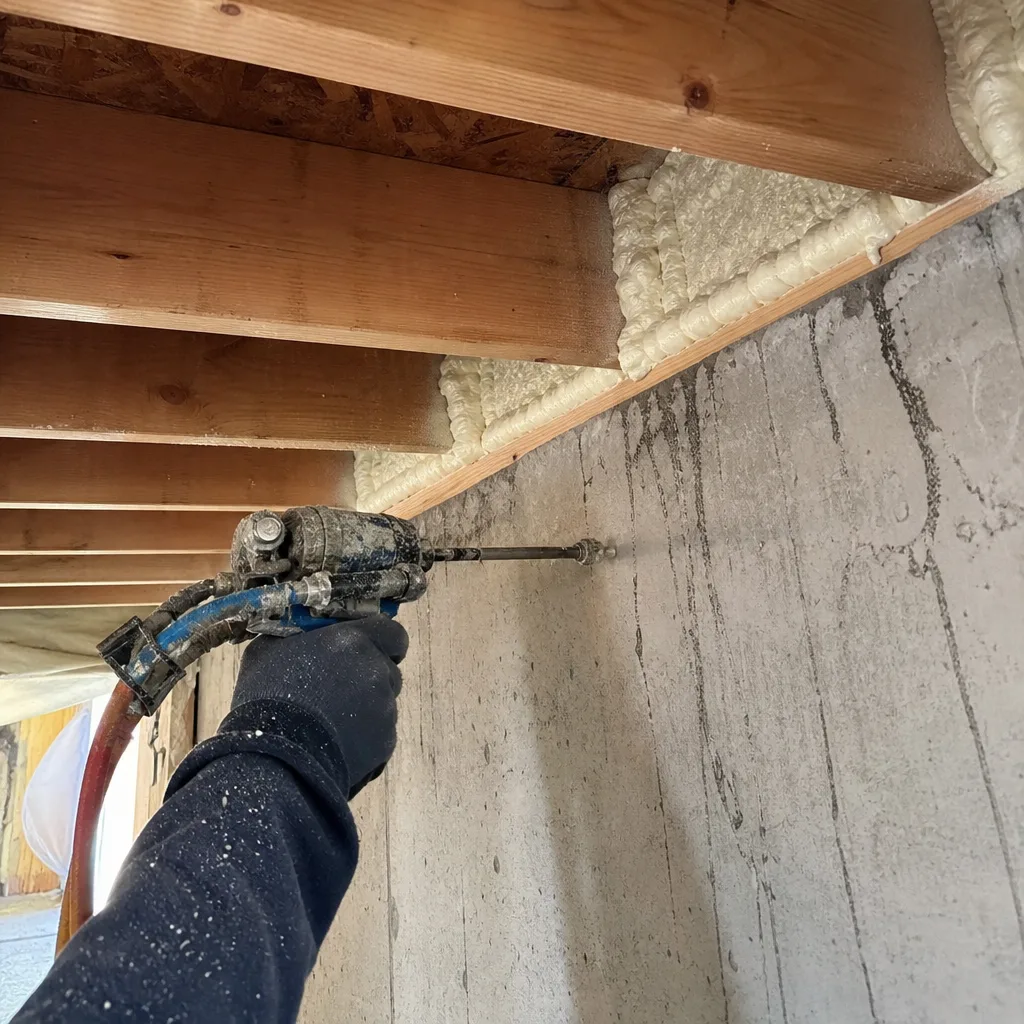
For fire or water emergencies, we recommend photographing everything before any crew touches the material, and keeping a written note of who arrived when. That timeline is often what wins a claim. When you’re ready for the insulation assessment, call (844) 978-0556. We answer live, around the clock, and we’ll tell you plainly whether you’re looking at a repair or a replacement. For larger projects, spray foam insulation in Paradise often becomes the right move after fire or water damage because it seals the cavity and won’t absorb water the way batt and loose-fill do.
What to Document for Insurance
Insurers don’t pay for what they can’t see. Document these items before remediation begins, ideally within the first few hours.
- Wide shots and close-ups of every affected area: wet insulation, soot, smoke staining, damaged ceiling or walls.
- The source of the damage: the cracked flashing, the failed pipe, the burned area.
- Moisture readings if you have a meter. If not, note the date and approximate time the damage appeared.
- Receipts for any emergency purchases: tarp, fans, dehumidifier rental, hotel if you had to leave.
- A written timeline of when you noticed the issue, who you called, and when.
- Photos of the removed material, bagged and labeled, if removal can’t wait for the adjuster.
- A written estimate from your insulation contractor, itemized by removal, disposal, new material, and labor.
Your insurer will want to know the pre-loss condition of the insulation. If you keep a simple maintenance log of your attic, that helps. If not, we recommend starting one now. It’s the least glamorous preparedness step on this page, and it’s the one that most often pays for itself.
Emergency Preparedness Steps to Take Now
The best time to prepare for an insulation emergency is the quiet season, before you need it. These steps take an afternoon and make the next emergency a whole lot cheaper and faster.
- Know your attic. Measure the insulation depth and write it down. Photograph the attic before anything happens. Confirm the R-value with a pro if you’re not sure.
- Seal air leaks first. Most Paradise attics have more heat loss through air leaks at the ceiling plane than through the insulation itself. Attic air sealing and insulation in Paradise done together gives you a meaningful buffer when temperatures spike.
- Fix roof issues before monsoon. Every flashing, vent boot, and scupper on your roof is a future insulation emergency if it fails. Get them inspected before July.
- Label your electrical panel. If you have to kill power to the attic in a hurry, you don’t want to be guessing at the breaker.
- Keep a home maintenance log. A simple notebook is enough. Date, issue, who fixed it, cost. Your future insurer will thank you.
- Store a tarp, a moisture meter, and a shop light where you can reach them without climbing into the attic first.
- Save your contractor’s number. When you’re standing in water at 2 a.m., you want it already in your phone.
Paradise homes that get through a heat wave or a monsoon with their insulation performing well usually have one thing in common: the homeowner knew what they had up there before the crisis. That knowledge is free and it’s the closest thing to a guarantee you’ll get in an emergency. If you’re not sure what’s in your attic, a home energy audit will tell you in about an hour. Our team uses materials from Owens Corning, Knauf, Rockwool, and Icynene depending on what your home needs, and we’ll recommend what fits your situation, not what’s easiest to sell. For more on where to start, see our Walt’s Insulation Paradise home page.
Common Mistakes to Avoid
- Calling HVAC first during a heat emergency. You’ll pay a diagnostic fee to learn your unit is fine and your attic isn’t. Run the fifteen-minute thermal check before you call.
- Pulling out wet insulation before your insurer sees it. You lose the strongest evidence in your claim. Photograph first, remove only when you have to, and document the removal.
- Assuming smoke-damaged insulation is fine because it looks fine. Soot isn’t visible on fiberglass at first. If you had a fire anywhere in the house, or a wildfire came close, have the attic inspected.
- Letting a remediation crew do the assessment and the work. The crew that makes the call shouldn’t be the crew that benefits from a “total replacement” recommendation. Get a second opinion on any written estimate. Ours is free.
- Waiting until monsoon season to fix a roof leak. In Paradise, the first storm of July is too late. Get flashing and scuppers checked in spring.
- Skipping the air sealing step on a replacement. New insulation over unsealed leaks performs like old insulation within a couple of seasons. Do both.
- Tearing out insulation without a moisture meter reading. Some wet-looking insulation is dry, and some dry-looking insulation is soaked. Measurement settles it.
When to Call a Professional
Call a professional immediately if any of these are true: visible water in your attic or ceiling, a musty smell that persists after the AC runs, any fire or smoke exposure in the home, a thermal gap over 8 degrees between adjacent rooms, or insulation depth that’s below the recommended level for our climate. Those aren’t DIY situations, and in Paradise, some of them aren’t safe to handle without power being killed first. Walt’s Insulation Paradise offers free estimates in Paradise, and our technicians have up to 26 years of experience. Background-checked, uniformed pros on every job, the Done Right Promise on every install, and no trip charge inside our service county. Call (844) 978-0556 and we’ll walk you through what you’re looking at. A live person answers every call, day or night.
Frequently Asked Questions
Check the temperature gap between rooms under your attic and rooms with a buffer (garage-adjacent, shaded). A gap of 8 to 12 degrees on a hot afternoon, combined with a ceiling that feels warm to the touch, points to insulation failure rather than equipment failure. An AC that runs continuously without holding setpoint, and whose gap narrows at night, is another strong signal. Call (844) 978-0556 for a free assessment before you replace equipment that may be fine.
Stop the source, kill power to affected circuits, and document everything with photos before anyone touches the insulation. Then get air moving with fans and call for an assessment. Wet fiberglass batts that have collapsed and saturated cellulose usually need removal, though a pro can confirm in person. Don’t let a remediation crew remove anything before your insurer has seen it or accepted your claim.
No. Smoke and soot embed in porous insulation, especially loose-fill fiberglass and cellulose, and will keep off-gassing into your home long after the fire is out. Even a fire in one part of the house can push smoke through the attic cavity. Insulation that looks intact after a fire should be professionally inspected and usually replaced. Call us for an assessment if your Paradise home had any fire or smoke exposure.
Cost depends on square footage, material, and how much has to be removed and disposed of. Loose-fill fiberglass and cellulose are usually the least expensive to replace, mineral wool and spray foam more. Your insurance may cover most of it if you document first. We give a written, itemized estimate with no trip charge inside our service county and a free second opinion on any written estimate you’ve received. Call (844) 978-0556 for an exact number.
Photograph everything before any material is touched: wide shots and close-ups of the damage, the source, and the attic access. Note the date and time you noticed the issue, keep receipts for emergency purchases, and get a written itemized estimate from your insulation contractor. If removal can’t wait for the adjuster, bag and photograph the removed material. A home maintenance log is the single best preparedness tool you can keep.
You can do the basics yourself: a walk-through with a thermometer, feeling ceilings, checking attic access panels, and noting AC run time. That gets you 80 percent of the answer. A professional assessment adds insulation depth measurement, air leak detection, and a moisture meter reading, which are what actually separate “insulation problem” from “HVAC problem.” Start with the basics, then call us at (844) 978-0556 for the rest.
The Bottom Line
Insulation emergencies come in three flavors in Paradise: heat, water, and fire. Each has its own order of response, its own documentation needs, and its own risk of being misdiagnosed. The common thread is that the homeowner who knows what’s in the attic before the crisis resolves faster, pays less, and keeps more of an insurance claim. Do the prep work now: measure your insulation, fix your flashing before monsoon season, start a maintenance log, and save a contractor’s number in your phone. When something does go wrong, call (844) 978-0556 for a free estimate. We answer live, we show up in uniform, and everything we install is backed by the Done Right Promise.
Written by the team at Walt’s Insulation Paradise.