
Last updated November 18, 2026
Insulation Cost Breakdown: The Paradise Homeowner’s Reference for 2026
The cheapest insulation quote you’ll get in Paradise almost always leaves out the air sealing. That missing step costs $200-$600 to add, and it roughly doubles the thermal performance of everything installed above it. Without it, you’ve bought an expensive placebo. This guide is built around that fact: quotes in Paradise vary 40-60% for what looks like the same job, and the reason isn’t contractor greed. It’s that most quotes aren’t describing the same job. Below you’ll find real 2026 price ranges for the most common Paradise insulation work, line-item breakdowns instead of mystery totals, and the vocabulary to decode what you’re actually being charged for.
Quick Answer
Insulation work in Paradise in 2026 runs roughly $1,400-$3,200 for attic blown-in, $900-$2,400 for spray foam rim joist sealing, and $1,200-$3,500 for batt replacement in a typical single-story home, with air sealing adding $200-$600 on top. The specific number depends on square footage, accessibility, and whether your ducts and stucco walls complicate the install. A quote that omits air sealing is not a cheaper version of the same job. It’s a different, worse job.
Table of Contents
- Why insulation quotes in Paradise vary so much
- 2026 Paradise insulation price ranges, by job
- What air sealing costs and why it’s usually worth it
- Hidden cost drivers in Paradise homes
- How to calculate a real payback period with NV Energy rates
- Why the cheapest quote and best value aren’t the same thing
- How to compare two quotes line by line
- Common mistakes to avoid
- When to call a professional
- Frequently asked questions
Why Insulation Quotes in Paradise Vary So Much
Two quotes for “attic insulation, 1,500 square feet” can land $1,400 apart and both be honest. What changes is what’s underneath the number. One quote may assume your attic floor is clear and ready to blow. The other may include pulling back old batts, sealing bypasses around recessed lights and top plates, baffling the eaves to keep airflow correct, and building a proper depth marker so the installer doesn’t skimp on coverage.
In our work across Paradise, we see the same split repeatedly. Three charges usually explain the gap:
- Air sealing line item. Present or absent. This is the single biggest swing, and it’s frequently hidden inside a vague “prep” charge or left out entirely.
- R-value target. Quoting R-30 versus R-49 changes material volume and depth. Those are very different jobs with very different bills.
- Access and removal. Attic access size, roof pitch, and whether old material has to come out all move the labor number.
Your job as a homeowner isn’t to distrust every price. It’s to force the elements into the open. Ask each contractor the same four questions: what R-value are you installing, is air sealing included and where, how many square feet are you covering, and what happens to the old material. The answers, side by side, tell you whether you’re comparing the same job or two unrelated ones.
2026 Paradise Insulation Price Ranges, by Job
These are the ranges we see for typical Paradise single-story and two-story homes in 2026. Treat them as planning numbers, not bids. A firm quote comes from walking your attic and measuring your actual conditions.
- Attic blown-in insulation (R-38 to R-49), 1,200-1,800 sq ft: $1,400-$3,200 installed. Material is typically Owens Corning or GreenFiber. Price climbs with depth, sloping roof sections, and existing debris.
- Spray foam rim joists (basement or crawl space perimeter): $900-$2,400. Icynene or Demilec closed-cell is common here because of how it handles moisture. Linear footage and band depth drive the number.
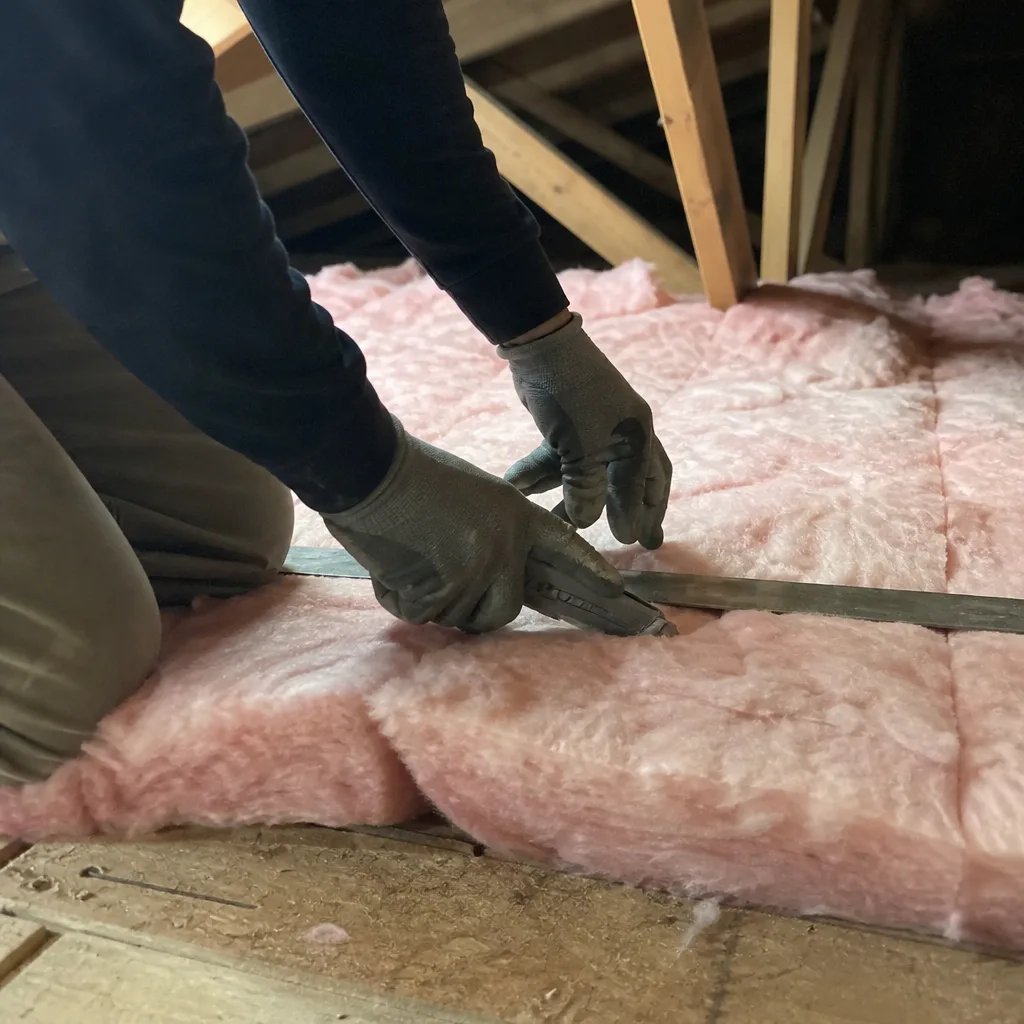
- Batt replacement (walls or attic floor): $1,200-$3,500. Full-wall jobs cost more because Paradise’s stucco exteriors complicate access.
- Air sealing (separate add-on): $200-$600, and it should almost never be a separate add-on.
- Old insulation removal (before reinstall): $500-$1,800, depending on volume and access.
Notice how the air sealing line is small relative to the rest. That’s the crux of this whole guide. It’s the cheapest line item with the biggest job on the performance sheet. For the full range of what we install and how, see attic insulation in Paradise.
What Air Sealing Costs and Why It’s Usually Worth It
Air sealing means closing the pathways where conditioned air escapes into your attic: top plates, recessed light housings, plumbing penetrations, electrical chases, and the gap behind drop ceilings. In a Paradise home, those small holes are where most of your cooling dollars leak out during summer. Adding insulation over unsealed bypasses does little, because the air simply moves through the new material.
The cost is small: $200-$600 for a typical home, sometimes less if it’s bundled with the insulation work. The payoff is large. Sealed attics let the insulation perform at close to its rated capacity. Unsealed attics waste much of what you paid for the insulation above them.
How to tell if a quote includes it
- Look for the words “air sealing,” “draft stopping,” or “sealing penetrations.”
- Check whether “prep” has a dollar figure attached. If it’s blended into the total with no detail, ask for the breakdown.
- Ask the contractor to point, in writing, to where they’ll seal and how many penetrations they expect to find. A real number means they looked.
If a quote can’t answer those three, it’s probably a blow-and-go job. That’s how you end up with insulation you paid for and can’t feel.
Hidden Cost Drivers in Paradise Homes
Paradise homes have a few cost factors that don’t show up on generic insulation calculators. They’re not deal-breakers. They’re things a fair quote accounts for, and a cheap one ignores.
- Extreme attic temperatures. Peak summer attic temps here run hot enough to slow install crews and require cooler-hour scheduling. That adds labor time, and it’s one reason a Paradise quote can land higher than a quote for the same square footage elsewhere.
- Stucco exteriors. Wall insulation work is harder when there’s no clapboard to pop off. Access holes and repair cost more here, and a quote that skips that reality is either guessing or about to surprise you with a change order.
- Older ductwork. Many Paradise homes have ducts that run through the attic. The crew has to work around them, seal any tears they find, and avoid crushing insulation beneath. If a quote doesn’t mention your ducts, it hasn’t priced the real job.
If your ducts are crossing a crawl space, the same logic applies. See crawl space encapsulation and vapor barrier in Paradise for what that work involves and how it pairs with insulation.
How to Calculate a Real Payback Period with NV Energy Rates
You can build a rough payback estimate in about ten minutes with two inputs: your current monthly cooling bill and the price of the insulation job. Paradise’s NV Energy rates make this math worth doing before you sign anything, because a short payback changes whether you’re buying comfort or investment.
The method:
- Pull your last two summer NV Energy bills and average them.
- Estimate that 25-40% of a summer cooling bill goes to heat gain through the attic. That’s the portion insulation can influence.
- Apply a realistic efficiency gain from the upgrade. Air-sealed and properly baffled attic jobs commonly deliver 15-25% overall cooling savings in this climate. A job with no air sealing delivers much less.
- Divide the job’s total cost by the monthly savings. That’s your payback in months.
A $2,400 attic job with $90/month in cooling savings pays back in about 27 months. A $1,600 job with no air sealing that saves $35/month takes nearly four years. Cheaper up front, slower to pay back. Don’t accept “you could save up to” numbers from anyone. Ask for the arithmetic.
Why the Cheapest Quote and Best Value Aren’t the Same Thing
There are four line items where cutting corners is expensive within five years. They’re the same four we watch for when we give a free second opinion on any written estimate:
- Skipped air sealing. Saves $200-$600 today, wastes the insulation above it for years.
- Shallow R-value. Quoting R-30 instead of R-49 saves a small amount on material, but you’ll do the job again long before you expected to.
- No baffles at the eaves. A few dollars of material that protects ventilation. Without them, moisture problems and condensation show up inside your roofline.
- Poor install on overhangs and slopes. Blown material settles unevenly in spots the installer rushed. The thermal gaps that follow are invisible until your summer bill tells you.
Value is the quote that names every line, includes air sealing, and comes from a contractor who’ll answer when you call in three years. That’s closer to the middle of the quote range than the bottom.
How to Compare Two Quotes Line by Line
Lay both quotes beside each other and check the same six boxes. If a quote gets vague on any of them, that’s your question to ask, not a reason to walk. Answers separate the honest from the unprepared.
- Square footage covered. Should be a number.
- R-value target. Should be a number.
- Air sealing: included, excluded, or “prep” with no detail.
- Baffling at the eaves included?
- Old material removal: included, or left in place?
- Warranty terms in writing.
If the job includes sealing rim joists or upgrading wall insulation, the same discipline applies. The full picture lives on our Walt’s Insulation Paradise home page. And if you want to sanity-check what you’re being quoted before you commit, we’ll do it for free. That’s the offer, and it’s how we do business in Paradise.
Common Mistakes to Avoid
- Choosing on price alone. The lowest bid is often the one that skipped air sealing, baffles, or both. Get the line items before you compare totals.
- Assuming “insulation” means the same job everywhere. R-values, coverage area, and removal all change the scope. Two quotes that look identical often aren’t.
- Skipping the second opinion. A fresh set of eyes on a written estimate costs nothing and catches gaps before you sign.
- Ignoring your attic access. Small hatches and difficult roof pitch raise labor. Ask whether the number accounts for it.
- Forgetting the ducts. In Paradise, ducts that cross the attic get worked around. If a quote doesn’t mention them, ask what happens to them.
- Buying the “prep” charge on faith. If “prep” has no dollar figure, you don’t know what you’re paying for. Ask for the itemization.
- Skipping the payback math. Without the arithmetic, a deal looks like a deal. With it, you can tell which quote actually pays.
When to Call a Professional
Call a professional when you can see daylight through your attic floor, when your summer NV Energy bill keeps climbing with no change in how you live, or when a previous install looks uneven and settled. Call when a quote doesn’t list air sealing and you need an honest second opinion before signing. Call when your crawl space is damp, because insulation there is only part of the fix. And call if you’re planning to remove old insulation yourself, since attic debris and heat make that work easier said than done. Spray foam, crawl space work, and full attic replacements are not weekend projects in Paradise’s climate. Walt’s Insulation Paradise offers free estimates in Paradise, and a real person answers every call. Reach us at (844) 978-0556.
Frequently Asked Questions
Most Paradise attic jobs run $1,400-$3,200 installed, depending on square footage, R-value target, and whether air sealing is included. A firm quote requires looking at your attic. Call (844) 978-0556 for an exact number, and the estimate is free.
Yes. Air sealing costs $200-$600 and gives the insulation above it most of its performance. Without it, the money you spend on insulation leaks out through the same gaps. Ask for it to be itemized on your quote.
Mostly because they aren’t describing the same job. Air sealing, R-value, removal, and baffling are the four swing items. Put two quotes side by side on those four and the price gap usually explains itself.
Most single-story Paradise attic jobs take one day. Extreme summer attic temperatures can push scheduling to cooler hours and occasionally into a second day. Ask your contractor how the heat affects their timeline.
Yes, roughly. Bring your last two NV Energy summer bills and the quote you’re considering, and we’ll walk through the arithmetic. No marketing numbers, just the math. Call (844) 978-0556 to set up the call.
That’s exactly what a free second opinion is for. We’ll review any written estimate, line by line, and tell you what’s in it and what’s missing. No trip charge inside our county, and no obligation.
The Bottom Line
Insulation costs in Paradise in 2026 mostly come down to what’s in the quote, not which contractor picked a bigger number. Attic blown-in runs $1,400-$3,200, spray foam rim joists $900-$2,400, batt replacement $1,200-$3,500. Air sealing adds $200-$600 and is usually the single most important line on the page. Paradise’s attic heat, stucco walls, and older ducts all add cost that honest quotes account for. Compare line by line, run the payback math, and treat the cheapest bid as the one most likely to leave something out.
If you’re comparing insulation quotes in Paradise and want a straight answer on what you’re looking at, call Walt’s Insulation Paradise at (844) 978-0556 for a free estimate. A real person answers, every call. We’ll also give you a free second opinion on any written estimate, and if you’re a senior or veteran, the 10% discount is permanent, not a promotion.
Written by the team at Walt’s Insulation Paradise.